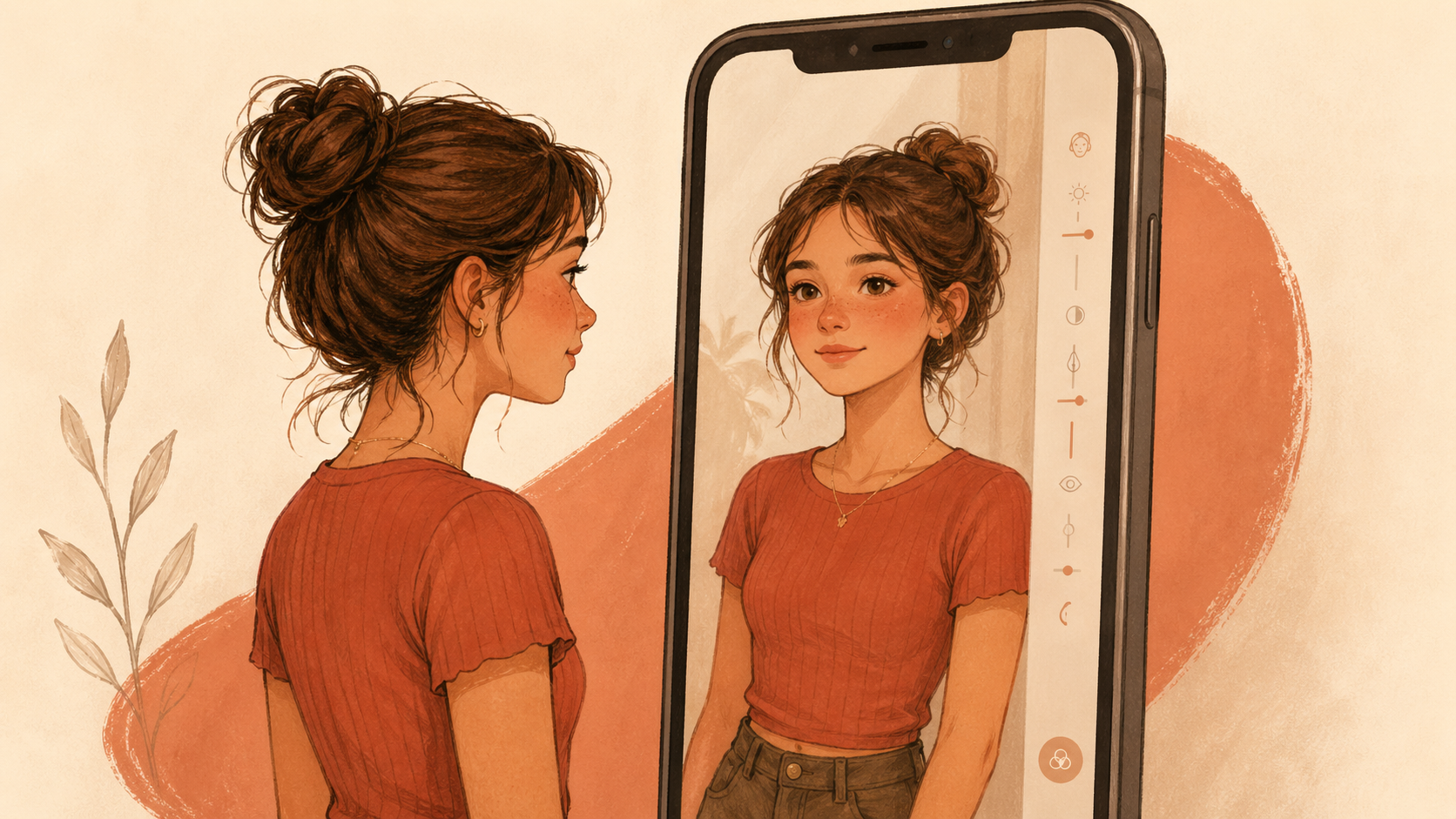
My daughter is 10 now, and I have a fear in my heart about what is coming.
Not because she has done anything wrong. Not because I think caring about appearance is new. But because I know what she is growing toward: feeds full of edited faces, filtered bodies, before-and-after posts, glow-up content, targeted ads, and a constant stream of images that can quietly reset what "normal" looks like. I wonder whether I will be able to help her see it clearly. I wonder whether she will recognize the pressure while it is happening, or only later, after it has already shaped how she feels about herself.
This is not just a teenage insecurity problem. There are industries behind the apps, the filters, the influencer deals, the beauty products, the diet products, the skincare trends, and the targeted ads. Their job is not to help teenagers build a healthy body image. Their job is to keep attention, create desire, and sell things. That does not mean every post is harmful or every teenager is helpless, but it does mean the pressure is designed into the environment.
You may already see this in your students: the casual self-criticism, the filtered photo anxiety, the fitness content that starts as motivation and ends in comparison. Body image pressure is not new, but social media has made the distortion faster, more constant, and harder to notice.
Social media can make comparison constant. Teenagers see edited photos, filters, fitness transformations and beauty content every day, and much of it is curated or altered, which can quietly shift what looks normal. The effects vary from person to person and are not all negative, but the pressure is strongest when use is heavy and focused on comparison.
Body image pressure is easy to frame as an individual confidence issue, but that misses the environment students are growing up in. A teenager is not just comparing themselves with classmates or celebrities. They are comparing themselves with edited images, filtered selfies, influencer content, fitness transformations, and beauty standards the algorithm keeps putting in front of them. The pressure is not always obvious because it arrives as ordinary content: a casual selfie, a "what I eat in a day" video, a skincare routine, a gym progress post.
The research does not say that every teenager who uses social media will develop body image problems. But it does show a clear pattern: when young people see a lot of idealized bodies and content about looks, many feel worse about their own bodies, and some become more vulnerable to unhealthy eating behaviors. The American Psychological Association also recommends limiting social comparison on social media, particularly around beauty- and appearance-related content. This does not mean social media only causes harm. It means these spaces can intensify pressure at exactly the age when identity and self-image are still forming. (PMC)
It is also important not to make this a girls-only issue. Girls often face intense pressure around thinness, beauty, and appearance, but boys can be affected too, especially through fitness accounts, muscle-focused content, and physique comparison. Meta's own internal research found that among teenage girls who already reported body image struggles, one in three said Instagram made them feel worse. That is worth naming, but so is the broader point: students need language for how the pressure works before they can decide what to do about it. (Facebook)
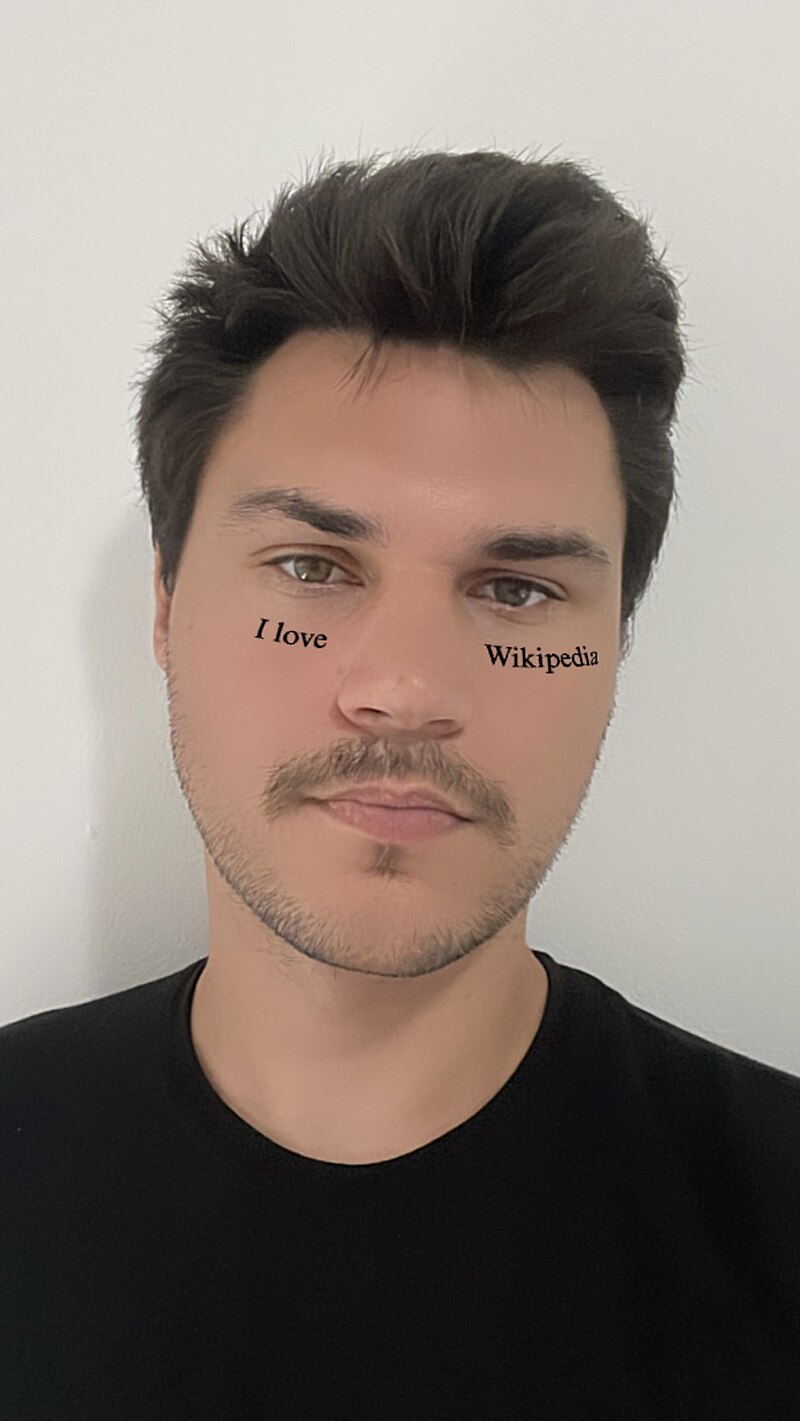
Filters are part of everyday selfie culture: often playful, sometimes beauty-focused, and gradually capable of shifting what "normal" looks like. Photo: إيان, CC BY-SA 4.0.
That is what led to Body Image and Social Media, a group activity for ages 14 to 18 that fits well in wellbeing, health, advisory, digital citizenship, media literacy, or life skills lessons. Students look at how appearance pressure builds online through filters, editing, likes, influencer culture, fitness content, before-and-after posts, and targeted ads. The activity is not about telling students how they should feel about their bodies. It is about helping them notice what is shaping those feelings, and giving them language to talk about it with more honesty and care.
| Ages | 14–18 |
| Group size | 3–4 students |
| Time | 60–70 minutes |
| Works for | Wellbeing, health, advisory, digital citizenship, media literacy, life skills |
The activity is built in three parts. In Part 1, students start by thinking about whether social media has affected how they, or people they know, feel about their appearance. They then work through a pressures table covering filters and editing, the algorithm, influencer culture, likes and comments, before-and-after content, and targeted ads. For each one, they discuss how it works and who it may affect most.
In Part 2, students work through realistic scenarios. These include checking a photo repeatedly after it gets fewer likes than usual, following fitness accounts that make them feel worse about their body, noticing a friend who seems anxious without filters, seeing before-and-after weight loss posts, and hearing a classmate joke about skipping lunch. The scenarios are designed to help students talk about pressure, comparison, and concern for others without forcing anyone to share personal details.
In Part 3, students reflect privately on their own relationship with social media and appearance. They think about whether filters have changed their baseline for "normal," how pressure may affect boys and girls differently, whether platforms should label edited images, and one change they could make to reduce appearance pressure in their own feed.
The lesson also includes a teacher guide with timing, facilitation notes, differentiation ideas, and an assessment rubric. The rubric focuses on understanding how social media shapes body image, scenario analysis, self-awareness, group discussion, and quality of reflection, so students are assessed on thoughtfulness rather than disclosure.
This lesson needs a calm and careful tone. Some students may have personal struggles with body image, eating, fitness pressure, or appearance anxiety, so make it clear early that nobody has to share anything personal. Keep the focus on noticing how the pressure works, not on personal disclosure.
Where groups may stall is the difference between "wanting to look good" and "feeling pressure to look a certain way." That line is not always obvious, and it will be different for different students. A useful question is: "Does this habit leave you feeling more confident, or more like something about you needs fixing?" That tends to open up better discussion than asking whether filters, fitness accounts, or before-and-after posts are simply good or bad.
The scenario about skipping lunch needs particular care. Students may laugh it off, but it is still worth naming that restriction around food can become serious. Keep the discussion focused on what a friend could do: notice the pattern, check in kindly, avoid making jokes about someone's body or eating, and involve a trusted adult if they are worried. This topic should be handled in line with school safeguarding procedures, and the teacher guide makes that clear.
Body Image and Social Media is part of the Wellbeing and Mental Health bundle, a collection of activities that help students talk more openly and practically about digital wellbeing, mental health, self-image, and the pressures they experience online. Use it as a standalone lesson on filters, editing, appearance pressure, body image, or social media habits, or as part of a wider sequence on wellbeing and digital life.