My son and I were watching NASA's Artemis Moon mission recently. I have always been intrigued by space, so this was a treat! A few days later I saw a YouTube clip from one of my favorite flat-earth debunkers, SciManDan, who commented on some conspiracy theorists trying their best to explain live why everything around that rocket, the launch, the camera angles, the speed, was fake. They were so convinced of their belief that even when it happened right in front of them, they still couldn't believe the truth. Amazing. I told my son about that and he was like "man, some people believe the weirdest shit, dad." I was somehow relieved.
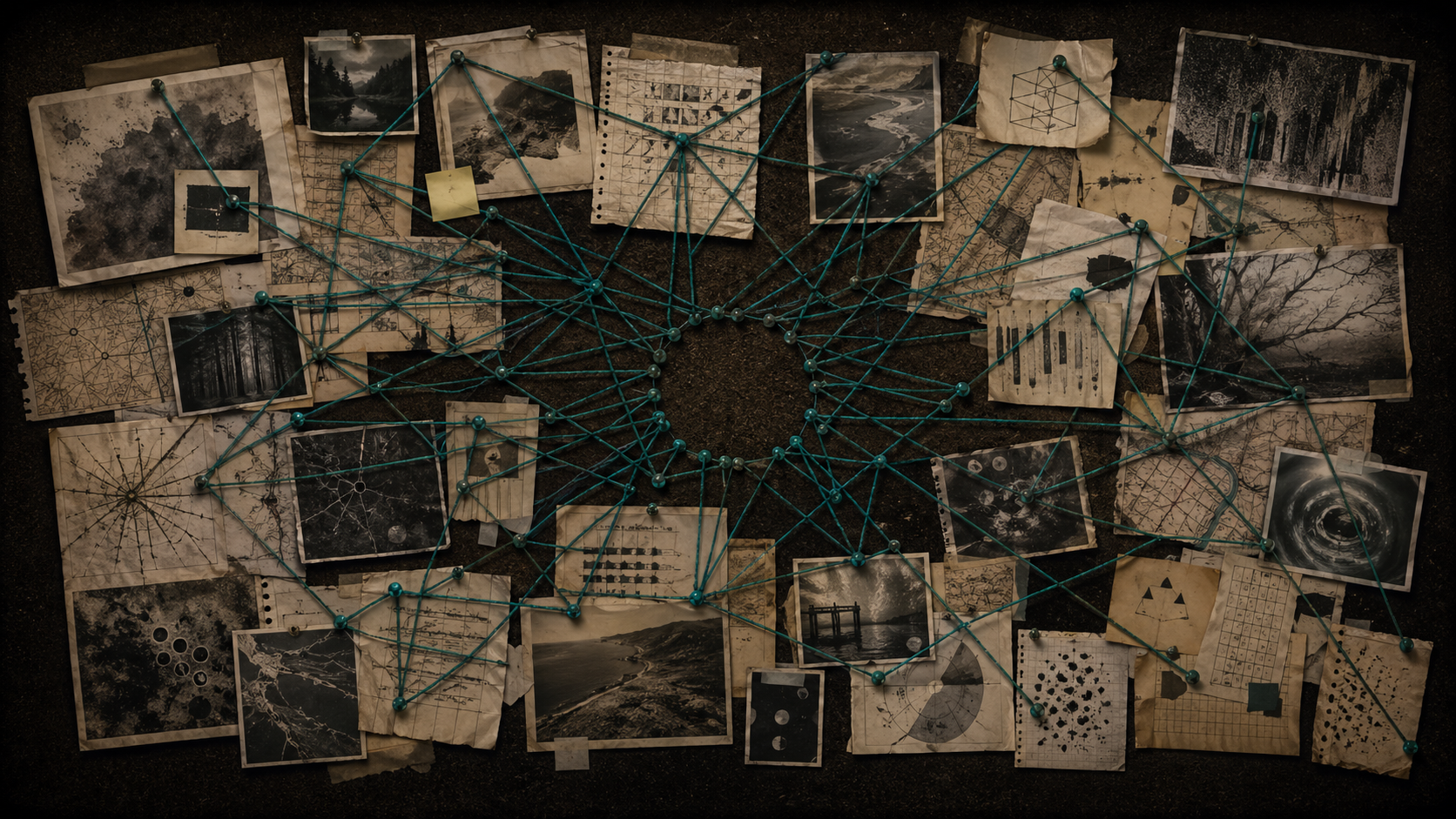
But conspiracy theorists are pattern-seeking, and the pattern they found feels very satisfying to believe.
That's what makes conspiracy theories stick. It's also what makes this topic genuinely hard to address in a classroom. Not because the facts are complicated, but because the feeling comes first.

QAnon supporters at Dealey Plaza, Dallas. Photo: Echinaceapallida, CC BY-SA 4.0.
Conspiracy theories offer simple explanations for confusing or frightening events, a sense of control, and the feeling of knowing something others don't. They are often tied to identity and community, which is why facts alone rarely change a believer's mind. Understanding that pull helps students recognize it in themselves, not only in other people.
Most resources on conspiracy theories focus on debunking. Students learn to spot obvious misinformation and leave feeling confident they'd never fall for it. The problem is that confidence is part of how conspiracy thinking works. The psychological reward of believing you have access to information others don't is a feature, not a glitch.
Research on belief change consistently shows that leading with facts rarely works when a belief is identity-linked. The Inoculation Science project at Cambridge has shown that pre-emptive training (exposing people to manipulation tactics before they encounter them) is a genuinely powerful tool. It's typically seen as complementary to fact-checking rather than a replacement for it, but that distinction matters for the classroom. I find that framing useful: it shifts the goal from "correct the belief" to "build the habit of asking why this feels so satisfying." That's a different lesson, and a better one.
That is the thinking behind Conspiracy Theories, a group activity for ages 12 to 18 that fits well in media literacy, digital citizenship, social studies, life skills, or advisory lessons. Students do not just define conspiracy theories in the abstract. They work through claims that range from clearly false to genuinely complicated, practice the harder skill of talking to someone who believes something they think is wrong, and examine why these ideas can feel so psychologically satisfying. The work is to ask why a claim feels compelling before deciding what to do with it, not to mock the people who believe it.
| Ages | 12–18 (grades 7–12) |
| Group size | 3–4 students |
| Time | 60–70 minutes |
| Works for | Life skills, media literacy, citizenship, advisory periods, school counseling |
This is a 6-page group activity for 3–4 students, built for grades 7–12 and equally usable in college and adult education settings.
The teacher guide for you covers timing, facilitation tips, differentiation suggestions, and a psychology section on why people believe conspiracy theories. The rubric sits on its own page for easy printing.
The student worksheet has three parts. In Part 1, students write down a conspiracy theory they've heard of and explain, without being dismissive, why someone might believe it. They then compare their answer to the psychology section.
Part 2 is the core of the activity: students work through a claims analysis table with six real-world examples, rating each as false, complicated, or largely true. The table is deliberately designed: some claims are clearly false, some are genuinely complicated, and one (social media companies designing for addiction) is largely documented. Students have to sit with that ambiguity rather than dismiss everything.
Part 3 tackles the hardest skill: how to talk to someone you care about who believes something you think is false. The individual reflection follows the group work.
Your teacher guide notes suggest that ambiguous claims table is the core of what makes this different. Students don't just practice identifying misinformation. They practice noticing when they were wrong to dismiss something, which is a harder and more useful habit.
Your teacher guide flags something worth taking seriously before you start: some students will have family members who hold these beliefs. The framing throughout avoids "believers are irrational." Keep that framing. Students who feel the topic is an attack on someone they love will shut down before Part 2.
The claims table tends to produce overconfidence on the first read. Students often call everything false, quickly. Slow that down. Ask a group to explain their verdict on one of the "complicated" entries before moving on. A group that confidently marks the pharmaceutical data claim as false, then finds out it's documented, learns more in that moment than from any explanation of how conspiracy theories work. God knows that's how my son learns best too.
The "how to talk to a believer" section works best last. By the time students reach it, they've already grappled with why people believe, and the conversation lands differently.
Conspiracy Theories is available to download from my store Graphene - Digital Life Lessons on Teachers Pay Teachers. It's part of the Navigating Information Online bundle, six activities covering detecting misinformation, echo chambers, filter bubbles, how to read the news, and satire vs. misinformation. Each one works as a standalone session or as part of a sequence, so you can dip in or build a unit.
I read each one.