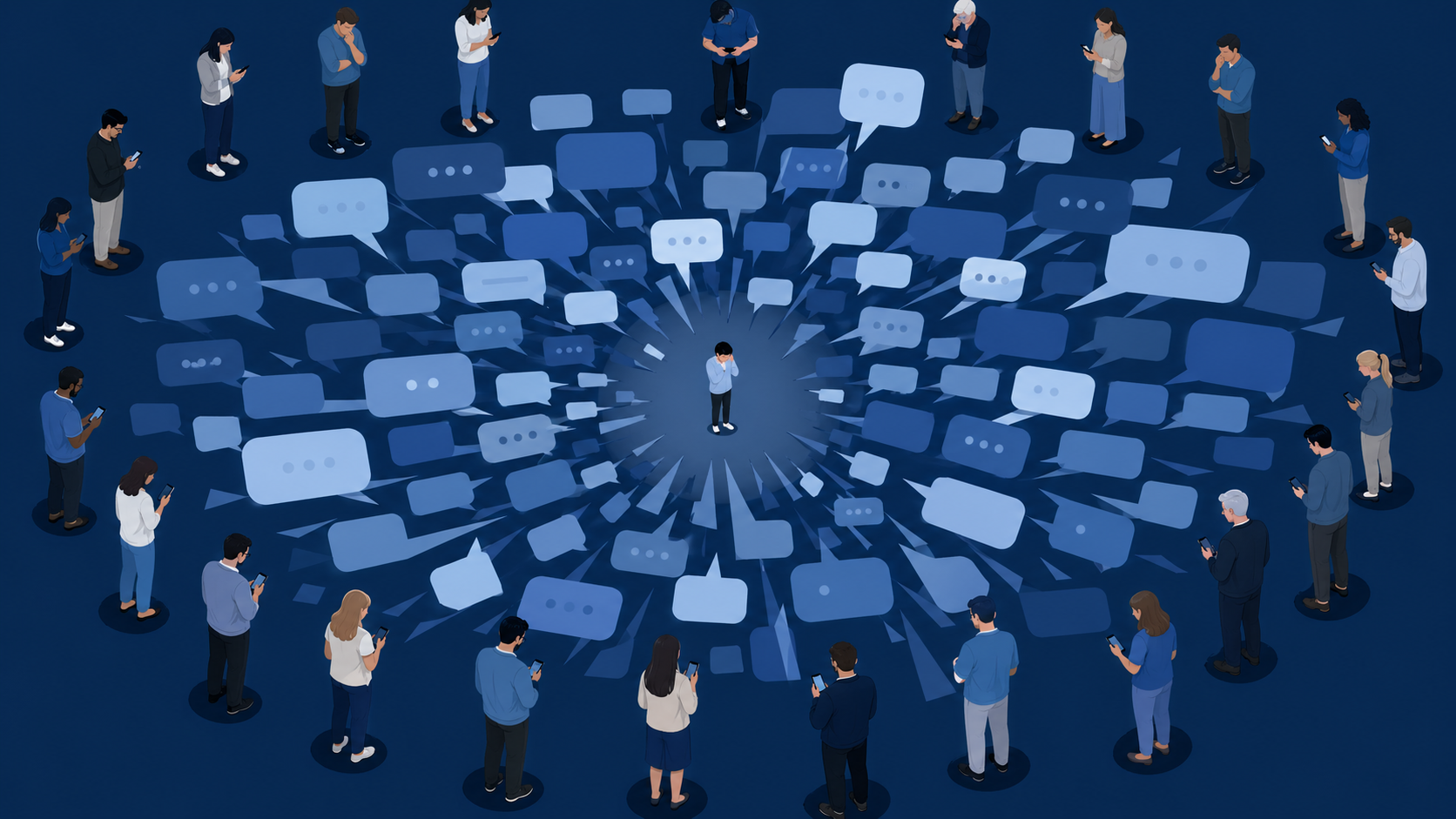
You sometimes see it when a student makes a vague comment about a group chat, a screenshot, or something that happened "online." Other students clearly know what they mean. A few look down. Someone half-laughs. Nobody wants to say too much. The room has that uncomfortable feeling where something unkind may be happening, but naming it feels risky.
That is one of the hardest parts of cyberbullying. It is rarely just a bully and a target. There are usually people watching, liking, sharing, laughing, leaving the chat, staying quiet, sending private messages, or deciding it is not their problem. Most students know the ideal answer in theory. What matters more is helping them think through what they might do when speaking up could make them the next target.
The focus cannot only be "don't cyberbully." Students also need to understand bystander choices, social pressure, and the small actions that can either slow harm down or help it spread.
Cyberbullying is bullying that happens through phones, apps, games and social media: harassment, threats, exclusion, impersonation, rumors or sharing embarrassing images. It differs from offline bullying because it can follow someone home, reach a large audience quickly and stay online long after it was posted. Bystanders who like, share or stay silent play a bigger part than they often realize.
Cyberbullying is not a side issue in school life just because it happens on a screen. The CDC's 2023 Youth Risk Behavior Survey found that 16% of U.S. high school students reported being electronically bullied in the previous year. It also reported that students who experienced bullying, including electronic bullying, were more likely to report sadness, hopelessness, and suicide risk than students who did not. (CDC)
The online part changes the shape of the harm. A cruel comment in a hallway may be witnessed by a few people and then pass. Online, it can follow the target home, spread through screenshots, reach people far beyond the original group, and stay visible long after the person who posted it has moved on. The audience matters too. A like, a laugh reaction, a repost, or staying in a group chat while someone is targeted can all make the behavior feel approved.
That is why bystander behavior deserves more attention. Students may not be the person posting the cruel caption or sending the threat, but they may be the person deciding whether to report it, leave the chat, send support privately, correct a false rumor, or refuse to share it further. Fear, loyalty, embarrassment, and social pressure make those choices hard. Students still need to see that doing nothing online is not always neutral.
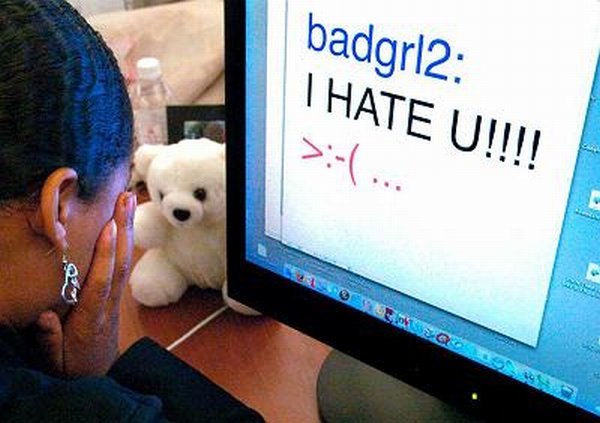
Online pile-ons can feel low-stakes from any individual's point of view: one like, one laugh, one repost. From the target's point of view, they all add up. Image: J_O_I_D, CC BY 2.0.
Cyberbullying gives students a structured way to talk about this without asking anyone to disclose personal experiences. It is a group activity for ages 12 to 18 that fits well in digital citizenship, online safety, advisory, wellbeing, health, life skills, or social-emotional learning lessons. Students compare cyberbullying with offline bullying, identify different types of online harm, and work through bystander scenarios where the choice is not always simple. The goal is to move beyond "be kind online" and help students think realistically about what they can do when they see cyberbullying happen.
| Ages | 12–18 |
| Group size | Groups of 3–4 |
| Time | 55–65 minutes |
| Works for | Digital citizenship, online safety, advisory, wellbeing, health, life skills, social-emotional learning |
The activity is built in three parts. In Part 1, students compare cyberbullying with offline bullying. They work through a types table covering verbal harassment, exclusion, impersonation, outing, cyberstalking, and image-based abuse, then discuss how each one differs from its offline equivalent and which types may be hardest to escape.
In Part 2, students focus on the bystander. Before looking at the scenarios, they list reasons people often stay silent when they see someone being targeted online. Then they work through realistic situations involving group chats, cruel edited images, exclusion from online activities, false rumors, and threatening messages. For each one, students choose what they would do, not just what they think they should do.
In Part 3, groups agree on five practical actions a bystander can take when they see cyberbullying happening. The emphasis is on specific, realistic actions, such as reporting content, sending private support, leaving a harmful group chat, correcting a rumor, saving evidence, or speaking to a trusted adult. Students then complete individual reflection questions about silence, responsibility, platform moderation, difficult choices, and what they might do differently in the future.
The teacher guide includes timing, safeguarding notes, differentiation ideas, an extension task, and an assessment rubric focused on understanding cyberbullying, bystander analysis, empathy and perspective-taking, group discussion, and quality of reflection.
This lesson needs a careful frame before students begin. Make it clear that nobody has to share personal experiences, name people, describe incidents from your school, or explain something they have been through. Keep the discussion general and scenario-based. If a student does disclose something serious, follow your school's safeguarding procedures.
Students may get stuck on giving the "correct" answer rather than the honest one. Most know they are supposed to say "I would report it" or "I would stand up for them." But the lesson becomes more useful when they can name what gets in the way: fear of becoming the next target, not wanting to be seen as an informer, uncertainty about whether it is serious, loyalty to friends, or not knowing whether an adult will handle it well.
The discussion often gets sharper when students look at passive amplification. Liking, laughing, sharing, or staying in the chat can feel small from the bystander's point of view, but it tells the target, the bully, and sometimes the algorithm that the content is getting a response. A useful question is: "What actions make harm louder, even when you did not start it?"
Spend time on options that do not require a public confrontation. Some students imagine bystander action as a dramatic call-out in front of everyone, which can feel unrealistic. But reporting, leaving the chat, refusing to share, checking in privately with the target, saving evidence, or telling a trusted adult can all matter. Good intentions are not enough here. Students need a few realistic moves they could use when the pressure is real.
Cyberbullying is part of the Digital Privacy bundle, a collection of activities that help students think more clearly about online safety, digital identity, privacy, cyberbullying, passwords, scams, and the choices they make in digital spaces. Use it as a standalone lesson on cyberbullying, bystander behavior, online harm, social pressure, or digital citizenship, or as part of a wider sequence on online safety and wellbeing.