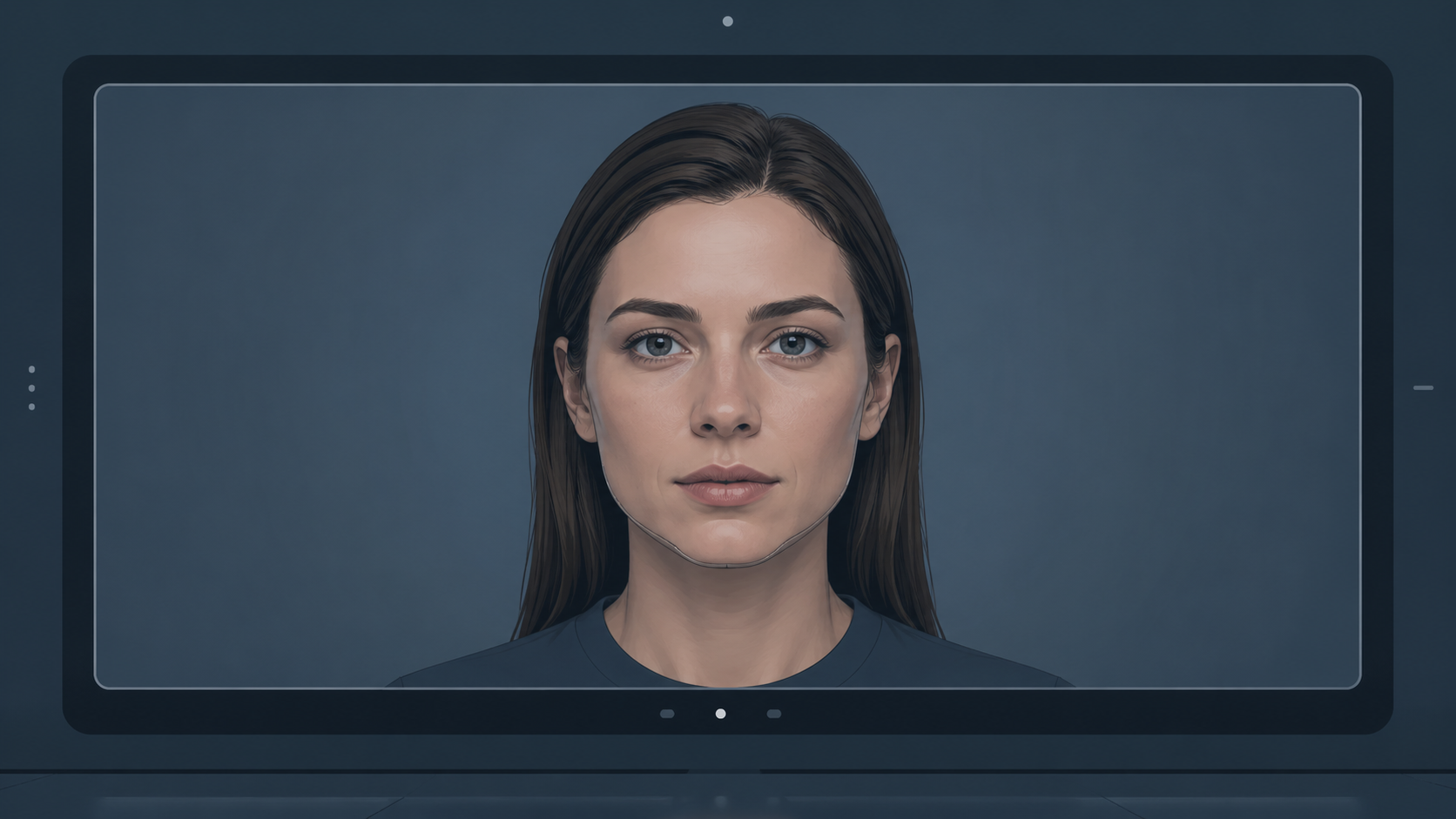
Recently, the example I kept coming back to was the fake Biden robocall during the 2024 New Hampshire primary.
Voters received a call that sounded like President Biden telling them not to vote in the primary. It was not him. It was an AI-generated voice, and the FCC later proposed a $6 million fine against the political consultant behind it. The details are specific to one election, but the bigger issue is much wider: if a fake voice can sound real enough to mislead people at the exact moment a decision matters, then "I heard it myself" is not the proof it used to be. (FCC)
That is the obvious danger of deepfakes: fake media that looks or sounds real. But there is a second problem that may be just as important. Once people know deepfakes exist, real footage becomes easier to dismiss. A real video can be called fake. A genuine recording can be brushed off as AI-generated. Evidence does not only become easier to manufacture; it becomes easier to deny.
That is the tension students need to understand: the danger is not only fake videos that look real, but real videos becoming easier to reject. Students need to know how synthetic media works, but they also need to understand what happens to trust when seeing is no longer enough.
In short: do not rely on a quick "spot the fake" test. Teach students to check the source, context, and corroborating evidence, while recognising that real media can now be falsely dismissed too.
A deepfake is a video, image or audio clip made or altered with AI to show someone saying or doing something they never did. Synthetic media is the wider term for any content generated by AI. Deepfakes are a problem not only because fakes can look real, but because real recordings can now be dismissed as fake.
Deepfakes are often discussed as a detection problem: can you spot the fake? That is part of it, but it is not the whole issue. The more difficult problem is what happens to trust when realistic fake media becomes common. A video, image, or audio clip may still be real, but people now have a ready-made reason to doubt it. That is useful for scammers and propagandists, but it is also useful for anyone who wants to escape accountability.
This is sometimes called the liar's dividend: the benefit someone gains from the existence of deepfakes, even when no deepfake was used. The Brennan Center describes the idea as the way increasingly realistic deepfakes can make false claims that real content is AI-generated more persuasive. That matters for journalism, elections, courts, school communities, and everyday online life. Students are growing up in a world where "show me the video" is no longer the end of the argument. (Brennan Center for Justice)
There is another harm that deserves to be named directly. Non-consensual intimate deepfakes are a serious and growing form of image-based abuse, and research notes that they disproportionately affect women and girls. This is not a distant political problem or just a celebrity problem. It can show up in schools, friend groups, and private messages, which is why the discussion has to include consent, harm, and responsibility, not just clever technology. (ScienceDirect)
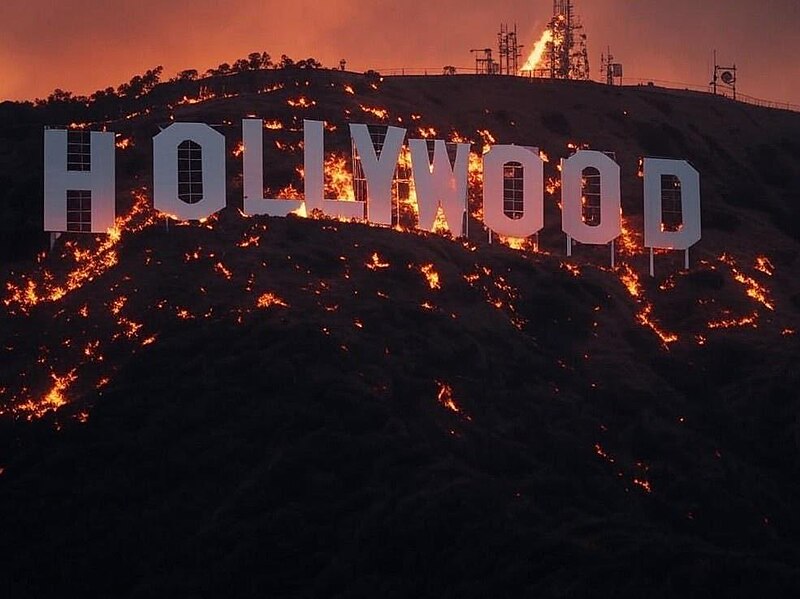
An AI-generated hoax image that circulated during the 2025 California wildfires, falsely showing the Hollywood sign engulfed in flames. The image was not real, but it spread widely before being identified. Public domain.
That is the thinking behind Deepfakes and Synthetic Media, a group activity for ages 14 to 18 that fits well in AI literacy, media literacy, digital citizenship, technology, social studies, ethics, or current events lessons. Students look at both legitimate and harmful uses of synthetic media, then work through the harder questions around consent, disclosure, intent, and harm. They learn when to pause, what to check, and why context often matters more than a quick technical "spot the fake" test.
| Ages | 14–18 |
| Group size | 3–4 students |
| Time | 60–70 minutes |
| Works for | AI literacy, media literacy, digital citizenship, technology, social studies, ethics, current events |
The activity is built in three parts. In Part 1, students start by discussing whether they have ever seen an image, video, or audio clip online that seemed fake, and what made them suspicious. They define deepfakes in their own words, then discuss what they see as the most dangerous and most legitimate uses of the technology.
In Part 2, students work through a use-case table. The scenarios include de-aging an actor with consent, deepfaking a politician before an election, recreating a historical figure's voice in a documentary, creating a fake compromising video of a classmate, using deepfakes for satire, cloning a CEO's voice for a scam, and generating a private video of a deceased relative. For each one, students identify legitimate uses, potential harms, and their group's verdict. This is where the lesson becomes more than "deepfakes are bad," because some cases are clearly harmful, while others depend on consent, disclosure, intent, and context.
In Part 3, students look at detection signals, including blinking, lip sync, lighting, edge artifacts, context, motivation, and reverse image or video search. Technical signals can help, but they are not enough on their own. As the technology improves, students need to combine observation with source-checking, motivation-checking, and common sense about why a piece of media is being shared.
The lesson also includes a teacher guide with timing, facilitation notes, differentiation ideas, and an assessment rubric. The rubric focuses on understanding deepfakes and synthetic media, use-case analysis, critical thinking about trust and verification, group discussion, and quality of reflection, so students are assessed on how well they reason through the examples rather than whether they can spot every fake.
The main thing to watch is that students may treat this as a "can you spot the fake?" lesson. That is useful, but too narrow. Detection signals matter, but they are becoming less reliable as the technology improves. Keep bringing the discussion back to context: who shared this, why now, what reaction is it trying to produce, and can it be verified somewhere else?
Where groups may stall is on the ambiguous use cases. A fake video of a politician before an election is easy to judge. A clearly labeled documentary reconstruction or a private video made for a grieving family is more complicated. That is where the best discussion happens. Ask students to name the principle they are applying: consent, disclosure, intent, likely harm, public interest, or something else.
Things usually shift when you introduce the liar's dividend. Ask students: "What happens when real evidence can be dismissed as fake?" That question tends to shift the lesson from technology to trust. It helps students see that synthetic media is not only about whether a single clip is real. It is about what happens to journalism, courts, elections, and everyday relationships when people can no longer agree on what counts as evidence.
Deepfakes and Synthetic Media is part of the AI, Technology and the Future bundle, a collection of activities that help students think critically about generative AI, synthetic media, digital trust, and the choices they will need to make as online evidence becomes easier to create and harder to verify. Use it as a standalone lesson on deepfakes, AI voice cloning, media literacy, consent, or misinformation, or as part of a wider sequence on AI literacy and digital citizenship.