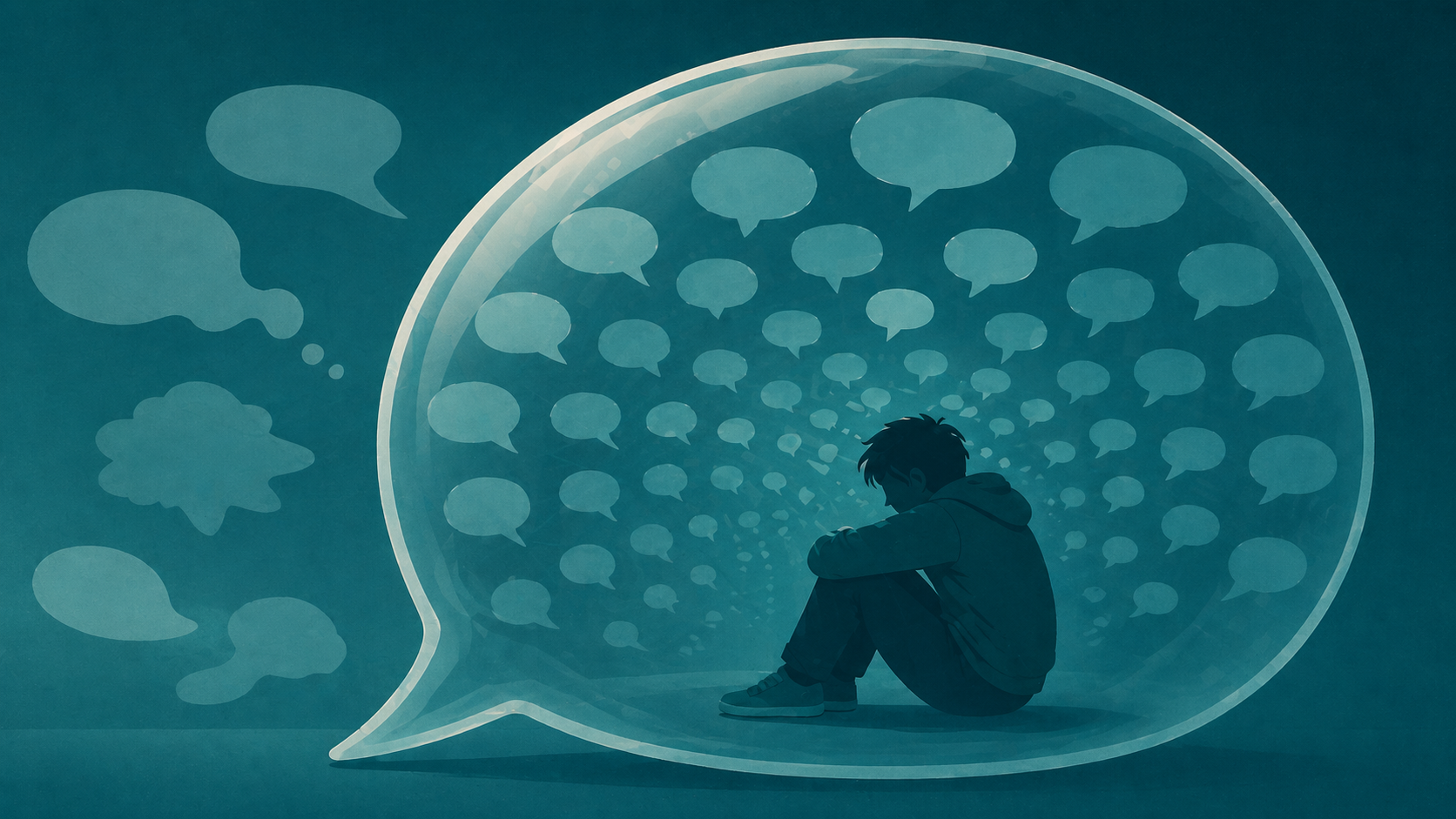
A few years ago, I realized I had built myself an echo chamber.
I was pretty left-leaning politically, and I started noticing a pattern in what I was hearing. The podcasters I listened to, the streamers I watched, the YouTube clips that kept showing up for me: they were often saying things I already agreed with. Sometimes they challenged details, but not the bigger worldview. It was comfortable, and it felt informed, but I was hearing the same message over and over.
So I made a conscious change in my media diet. I started including more sides of the story, including right-leaning media and commentators I definitely did not always agree with. That part matters. The goal was not to swap one echo chamber for another. It was to understand why other people saw the same issues differently. I still disagreed with plenty of it, but at least I was hearing it directly and allowing it to test my own assumptions.
I am glad I did. It made me more centered in some of my political and socio-economic views, and more careful about assuming my side had the full picture. But echo chambers are not just a political problem for adults. They are everywhere, including in the online spaces my 16-year-old son moves through. His feed is not random. It has a shape, built from what he watches, likes, skips, shares, and follows. The question is whether he can see that shape clearly enough to question it.
An echo chamber is an online space where people mostly hear opinions that match their own, so those views get repeated and reinforced while other views are ignored or mocked. Algorithms play a part, but echo chambers are also built by our own choices about who we follow and what we share. They differ from filter bubbles, which are shaped mainly by what algorithms decide to show us.
Echo chambers are easy to blame on algorithms, and algorithms are definitely part of the story. Platforms learn what students watch, like, skip, share, and argue with, then show them more of what keeps them engaged. But the human side matters too. We all tend to follow people we agree with, avoid things that annoy us, remember evidence that supports our view, and explain away evidence that challenges it.
That is why this topic needs some nuance. The research does not say every social media user is trapped in a sealed bubble. Some reviews have found that people online may encounter more mixed views than we assume, especially through weak ties like relatives, classmates, coworkers, or random accounts that cross their feed. At the same time, other studies show that echo chambers do form around controversial topics and that different platforms can shape them in different ways. The honest point is not "social media always traps you." It is that students need to notice when their own feed starts reinforcing one version of the world too comfortably. (PMC)
For students, the danger is not just being wrong. It is becoming harder to surprise. If every post, clip, comment, and recommended video confirms what they already think, disagreement starts to feel stupid, dishonest, or threatening. That makes critical thinking harder. A good media literacy habit is not agreeing with every opposing view. It is being willing to hear it clearly enough that your own view has to do some work.
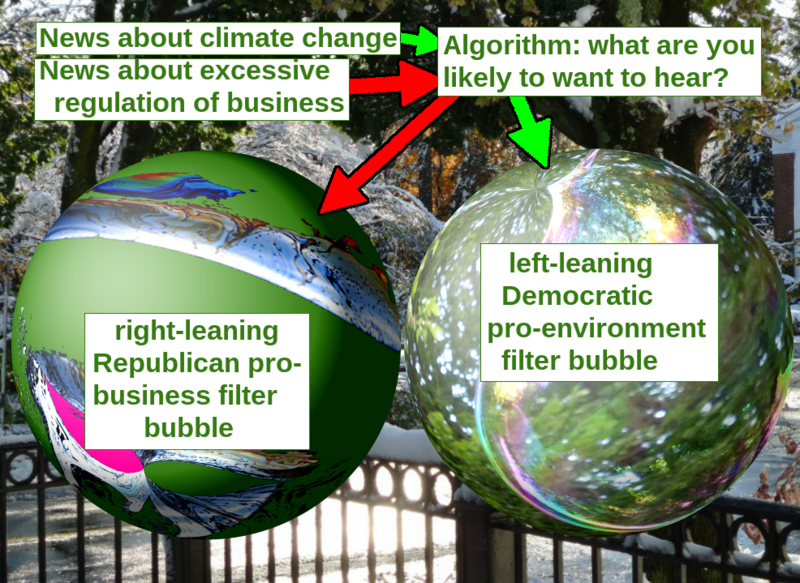
How a filter bubble forms: platforms guess what each user wants to see and route different information to different people. Over time, communities become more similar internally and less aware of each other. Illustration: Tomwsulcer, CC0.
Those questions sit at the core of Echo Chambers, a group activity for ages 12 to 18 that fits well in media literacy, digital citizenship, social studies, critical thinking, advisory, or current events lessons. Students do not just define echo chambers in theory. They audit their own feeds, look at how algorithms and personal habits shape what they see, and practice finding arguments from a viewpoint they do not already agree with. The work is to notice the information environment they are already swimming in and ask whether it is helping them think clearly.
| Ages | 12–18 |
| Group size | 3–4 students |
| Time | 60–75 minutes |
| Works for | Media literacy, digital citizenship, social studies, critical thinking, advisory, current events |
The activity is built in five parts. In Part 1, students define what they think an echo chamber is, then compare ideas in groups. They brainstorm why echo chambers form, looking at algorithms, self-selection, confirmation bias, social pressure, and recommendation engines. This helps them see that the problem is not just "the algorithm." It is also our own habits and preferences.
In Part 2, students complete a private feed audit. They open their most-used social media platform and look at their feed with fresh eyes. They reflect on how many accounts share similar views, when they last saw something that changed their mind, whether they follow any news sources that lean differently from them, and whether their feed usually makes them feel informed, outraged, reassured, or entertained.
In Part 3, students deliberately go outside their bubble. They pick a topic they already have a clear opinion on, then spend time finding sources that argue the opposite side. Afterward, they discuss whether those arguments were easy to find, whether anything surprised them, and whether their view changed even slightly.
In Part 4, students work through five debate statements as a group, filling in arguments for and against each one before deciding where they land. Statements include "Social media algorithms are designed to keep you angry because angry people scroll more," "It is possible to be well-informed while only following people you agree with," and "Echo chambers are more of a problem for older generations than for teenagers." The disagreement is part of the work.
In Part 5, students reflect individually on whether they think they were in an echo chamber before the lesson, which debate statement was hardest to resolve, whether echo chambers are always harmful, and what one practical step they could take to get a more balanced view of something they care about.
The teacher guide includes timing, facilitation notes, differentiation ideas, and an assessment rubric focused on understanding echo chambers, self-awareness about feeds, engagement with opposing views, debate contribution, and quality of reflection.
This lesson works best when students do not feel accused. Some may realize their feed is more one-sided than they thought, and the first reaction can be defensiveness. Keep the feed audit private and frame it as a mirror, not a test. Their feed has been shaped, and it is worth noticing how.
A tricky moment can come when students blame everything on the algorithm. Algorithms matter, but they also respond to behavior. What students watch, skip, like, mute, follow, share, and argue with all help train the feed. A useful question is: "What did the platform choose for you, and what did you teach it to choose?" That keeps the responsibility shared instead of putting it all on either the student or the technology.
Looking for the opposite side of an issue is usually where it gets interesting. Ask them: "Did you find a weak version of the other side, or the strongest version?" That question matters. It is easy to find bad arguments from people you disagree with. It is much harder, and much more useful, to find the best argument against your own view and sit with it honestly.
Echo Chambers is part of the Navigating Information Online bundle, a collection of activities that help students think more clearly about misinformation, online information, bias, critical thinking, and the way digital platforms shape what they see. Use it as a standalone lesson on echo chambers, algorithms, confirmation bias, online feeds, or opposing viewpoints, or as part of a wider sequence on media literacy and critical thinking.