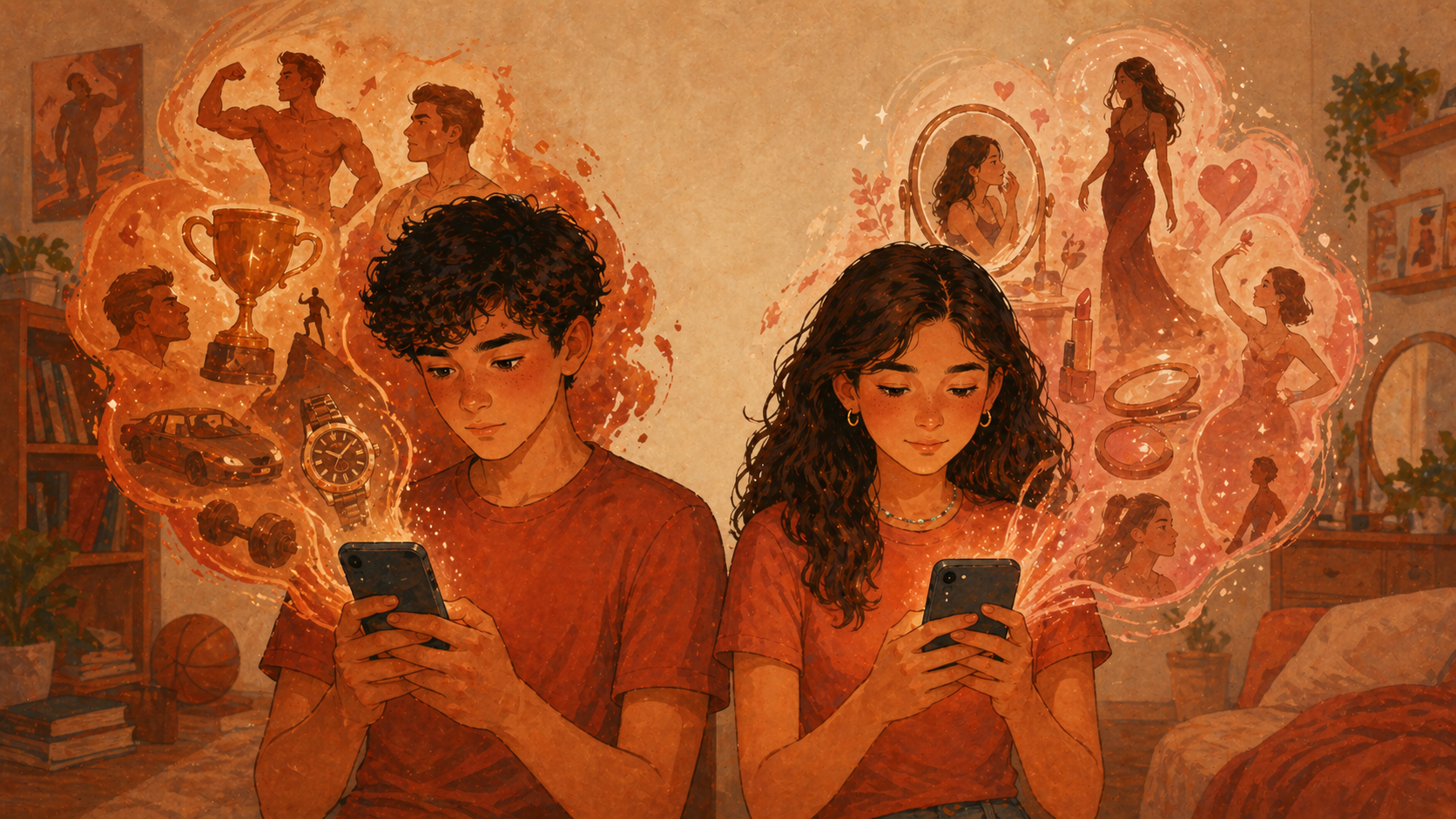
Lately, I have noticed how often "traditional" gender roles are being packaged as lifestyle content.
Not in an obvious lecture about how men and women are supposed to behave. More often, it shows up as something softer and more appealing: a perfectly filmed kitchen, a calm morning routine, a man explaining what "real masculinity" means, a woman talking about choosing a simpler life, a clip about how modern dating is broken, or a post that says boys and girls are unhappy because they have forgotten their natural roles.
That is what makes this topic tricky. My son is not deep into manosphere content, thankfully, but students do not have to seek out extreme spaces to meet these ideas anymore. Some of them have moved closer to the mainstream. Tradwife content, for example, has moved from niche internet culture into major lifestyle coverage, with influencers such as Nara Smith and Hannah Neeleman becoming part of a wider public conversation about gender roles, money, motherhood, work, and online identity. (ABC News)
The concern is not that every student who watches a video about masculinity, femininity, homemaking, dating, or confidence is being pushed into a harmful worldview. That would be too simple. The concern is that social media can push young people toward rigid gender scripts before they have had much chance to question them: men should be dominant and unemotional; women should be soft and self-sacrificing; boys and girls are naturally opposed; equality has gone too far.
That is the tension students need to understand: social media does not just reflect gender expectations. It can package them into identities that feel simple, certain, and emotionally satisfying.
Social media gives young people a steady stream of messages about how boys and girls should look, act and succeed. Algorithms can move some users from ordinary content, like fitness or relationship advice, toward more extreme views, such as the manosphere for boys or tradwife content for girls. Those messages often start from real concerns, which is why they can be persuasive.
Gender content online often works because it starts with something real. Some boys feel lonely, aimless, or unsure what version of masculinity is available to them. Some girls feel exhausted by pressure around appearance, achievement, independence, and relationships. Content that speaks directly to those feelings can feel refreshing, especially when it presents itself as the thing "nobody is allowed to say."
The problem is what can happen next. A video about confidence can become a video about dominance. A post about homemaking can become a rulebook for what women should be. A clip about boys' mental health can turn into resentment toward girls. A lifestyle aesthetic can quietly become an ideology. The algorithm does not need to understand any of that. It only needs to notice what keeps people watching and send them more of it. Research and reporting on social media recommendation systems have raised concerns that platforms can amplify misogynistic or gender-stereotyped content, especially when it keeps young people engaged. (Institute for Strategic Dialogue)
This is why the topic needs more care than simply telling students that this content is wrong. Some of it responds to real needs: belonging, purpose, identity, admiration, stability, feeling seen. If students can understand the appeal, they are much better placed to question the framing. Rather than asking "Who is bad for watching this?" try: what need is this content meeting, and what is it teaching you to believe in return?

Gender expectations are built in from early childhood, through color, clothing, toys, and language. Social media does not create these norms from scratch. It finds them, amplifies them, and packages them into content that feels aspirational. Photo: Dominiqueas, CC BY-SA 3.0.
Those tensions are the focus of Gender and Social Media, a group activity for ages 14 to 18 that fits well in wellbeing, advisory, digital citizenship, media literacy, social studies, or life skills lessons. Students look at how gender-based content can move from broadly appealing self-improvement or lifestyle posts into more rigid ideas about masculinity, femininity, relationships, and power. The activity is not about shaming students for what appears in their feeds. It is about helping them examine why this content appeals, what real needs it speaks to, and where the framing starts to become narrow or harmful.
| Ages | 14–18 |
| Group size | 3–4 students |
| Time | 65–75 minutes |
| Works for | Wellbeing, advisory, digital citizenship, media literacy, social studies, life skills |
The activity is built in two main parts plus a reflection. In Part 1, students look at how the pipeline works. They compare two paths: the manosphere pipeline, which can begin with fitness, gym motivation, and self-improvement, and a female equivalent that can begin with "that girl" routines, wellness, productivity, and tradwife content. The key point is that the early stages often look positive, aspirational, and harmless. That is what makes them easy to enter.
In Part 2, students analyze examples of gender-based online content. They look at claims about men being designed to lead, women being designed to nurture, feminism making women unhappy, modern men being weak, tradwife life as a choice, and boys being ignored when they struggle. For each example, students ask what makes the message appealing and what concerns them about it. This helps them separate legitimate concerns from narrow or harmful framing.
The final reflection asks students to think about whether they had seen these ideas as a pipeline before, how real concerns like male loneliness or pressure on women could be addressed differently, whether platforms should intervene in recommendation systems, and what they would say to a friend they were worried about. The lesson also includes a teacher guide with timing, differentiation ideas, and an assessment rubric focused on understanding online gender content, content analysis, empathy, discussion, and quality of reflection.
This lesson needs a steady tone. Some students may recognize this content immediately, while others may feel accused because similar videos appear in their feeds. Keep the focus on when helpful advice starts turning into a narrow script for how men or women are supposed to be, without shaming anyone for watching it.
Where groups may stall is in separating the real concern from the harmful framing. Boys' loneliness is real. Pressure on girls is real. Confusion around dating, identity, work, family, and expectations is real. But a piece of content can start with a real concern and then offer an answer that blames the wrong people, flattens complexity, or pushes students toward resentment. A useful question is: "What part of this message speaks to a real need, and what part tries to turn that need into a rule?"
The strongest discussion often comes when students compare the male and female pipelines side by side. They may look different on the surface, but both can offer the same emotional promise: your life will make more sense if you follow this script. Ask students: "Who benefits if young people believe there is only one acceptable way to be a man or a woman?" That question usually moves the conversation away from individual influencers and toward the wider system of attention, identity, money, and belonging.
Gender and Social Media is part of the Wellbeing and Mental Health bundle, a collection of activities that help students talk more practically about digital wellbeing, identity, mental health, online influence, and the pressures built into social media. Use it as a standalone lesson on gender expectations, manosphere content, tradwife culture, online identity, or media literacy, or as part of a wider sequence on wellbeing and digital life.