My son is 16, which means work is no longer some far-off adult topic.
He is not about to become a full-time Uber driver tomorrow, but he is close enough to the age where flexible work starts to look attractive. Make some money. Set your own hours. Avoid a boss. Fit work around school, friends, or whatever comes next. I can see the appeal.
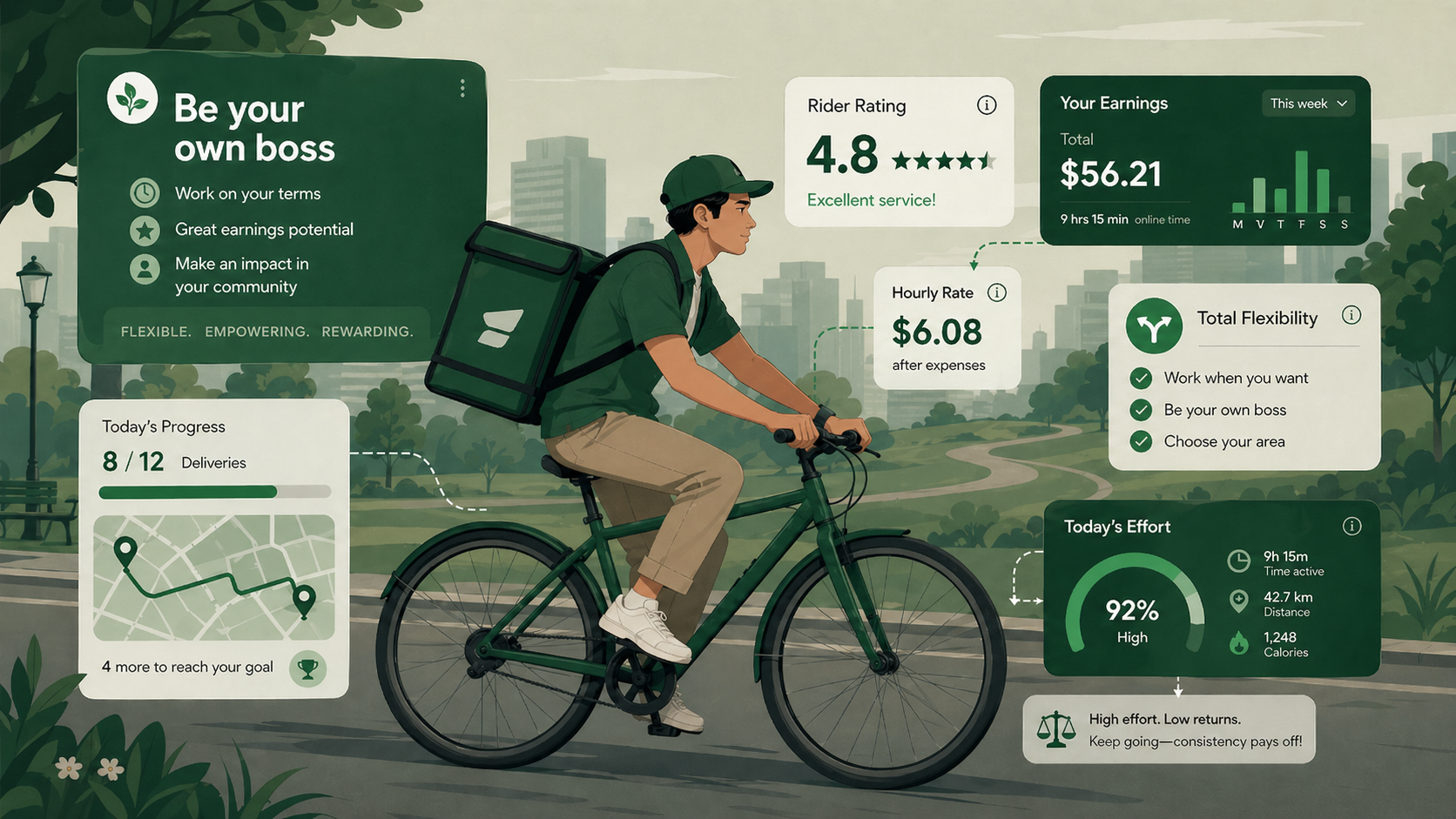
That is exactly why the gig economy is worth teaching carefully. It is often sold through the best-case version of itself: freedom, flexibility, be your own boss, make money quickly. Those things are not fake. For some people, they matter a lot. But they are not the whole story.
The question students need to learn to ask is not "Is gig work good or bad?" It is "What does this freedom cost, and who carries the risk when the platform does not treat the worker like an employee?"
In short: gig work can offer flexibility, but its real value depends on pay after costs, the protections a worker gives up, and who carries the risk when work becomes unreliable.
The gig economy is work done task by task through apps and platforms, like ride-hailing, food delivery and freelance marketplaces, instead of in a regular job. Gig workers are usually classified as independent contractors, so they often miss protections like minimum wage, sick pay and benefits, and they cover costs like fuel themselves. The flexibility is real, but so are the hidden costs.
Gig work is easy to understand at the surface level. A platform connects a customer with a worker, takes a cut, and the worker gets paid for completing the task. Underneath that simple exchange is a classification choice that matters a lot. Gig workers are usually classified as independent contractors, not employees, which means they often miss out on protections like minimum wage guarantees, sick pay, unemployment insurance, employer payroll taxes, health insurance, and retirement contributions.
The DW documentary The courier driver business adds a more serious real-world layer. It follows food couriers in Berlin, many of them migrant students, describing unpaid wages, subcontractors, cash payments, fear of retaliation, and workers who are connected to major delivery platforms but not directly employed by them. One courier explains that customers see the platform name at the door, but when there is a labor dispute, the company points to the subcontractor instead.
Students need something more useful than "gig work is flexible" or "gig work is exploitative." Both can be true depending on the worker, the platform, the country, the contract, and the person's other options. A better classroom conversation asks students to look past the marketing: What am I really earning? What protections am I giving up? What costs am I carrying myself? And how easy would it be to walk away if the work stopped being fair?
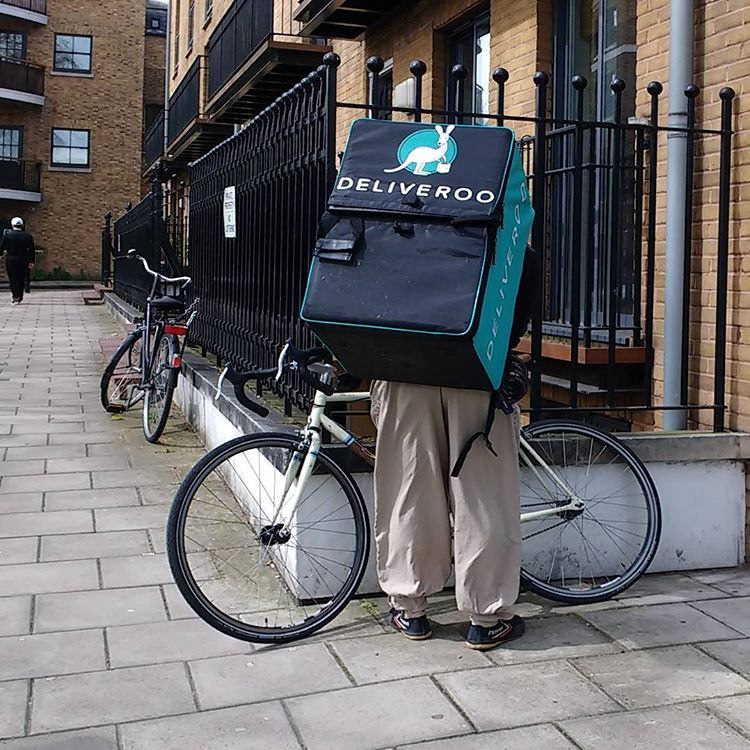
A Deliveroo courier in London. Customers see the platform name. When there is a labor dispute, the platform often points elsewhere. Photo: Môsieur J., CC BY 2.0
The activity The Gig Economy gives students a practical way to test the promise of flexible work against the numbers behind it. One of the sharpest moments in the lesson is the earnings calculation: students compare the gross hourly rate a platform might report with what a driver actually takes home after fuel, vehicle depreciation, and self-employment tax. The headline figure looks much better than the final number. That gap is where the lesson lands.
It is built for ages 12 to 18 and fits well in financial literacy, economics, careers, life skills, business studies, social studies, or advisory lessons. Students look at how platforms make money, weigh flexibility against missing protections, and apply the ideas to a realistic scenario about an 18-year-old considering gig work after high school. They learn to read the offer properly before they say yes.
| Ages | 12–18 (grades 7–12) |
| Group size | Individual, pairs, or small groups |
| Time | Around 60 minutes |
| Works for | Financial literacy, economics, careers, life skills, business studies, social studies, advisory |
The activity is built in four parts.
In Part 1, students look at how gig platforms work. They compare platforms such as Uber, Lyft, DoorDash, Fiverr, and Upwork, looking at what each platform does, what it takes from workers or customers, and why independent contractor status matters. They also identify protections employees often receive that independent contractors usually do not.
In Part 2, students calculate real earnings after expenses. They compare a reported gross hourly rate with the costs a driver carries themselves, including fuel, vehicle depreciation, and self-employment tax. The key moment is seeing how a headline rate around $19/hour can fall to roughly $7–8/hour once costs are counted.
In Part 3, students examine why people choose gig work and what they may struggle with. They compare the flexibility workers value with concerns such as inconsistent pay, lack of health insurance, limited emergency savings, no unemployment insurance, and no sick pay. The point is to hold both sides at once rather than pretending the evidence is simple.
In Part 4, students apply the lesson to a realistic scenario. Alex is 18, has just finished high school, and is thinking about driving for Uber full-time while he figures out what to do next. Students compare his possible earnings with his sister's lower hourly wage but stronger benefits package, then consider how gig work could affect his future options.
The teacher guide includes timing, facilitation notes, differentiation ideas, an extension task, and an assessment rubric focused on understanding how gig platforms work, calculating real earnings, evaluating benefits and risks, and reflection and critical thinking.
This lesson works best when students do the math themselves. If you simply tell them that gig work can pay less than it first appears, it may sound like an opinion. When they calculate fuel, vehicle wear, and tax, the gap becomes much harder to ignore. Give them a minute with the final number before moving on.
Students may want to split too quickly into "gig work is great" or "gig work is terrible." Try to keep them in the middle for longer. Flexibility is a real benefit. For some workers, especially those with school, caregiving responsibilities, health issues, language barriers, or limited access to traditional jobs, that flexibility can matter. But flexibility does not erase low or unpredictable pay, missing benefits, or the fact that workers often carry the costs and risk themselves.
The Alex scenario is a good place to make the lesson feel close to their own lives. Many students can imagine taking a flexible job for a year or two after high school. A strong question here is: "What would Alex need to know before deciding whether this is a smart short-term plan?" That keeps the conversation practical rather than ideological.
A good way to close is to have students name the questions they would ask before accepting a gig job. Who pays me? What does the platform take? What costs do I cover myself? What happens if I am sick, injured, or there is no work? Who is responsible if something goes wrong? That gives students a practical checklist they can use beyond the lesson, rather than leaving them with a simple pro-gig or anti-gig conclusion.
The Gig Economy is a ready-to-run group activity from Graphene - Digital Life Lessons. Students work through gig-work scenarios, calculate what pay looks like after costs, and examine flexibility, platform incentives, and worker protections. It is part of the Digital Money & the New Economy bundle.