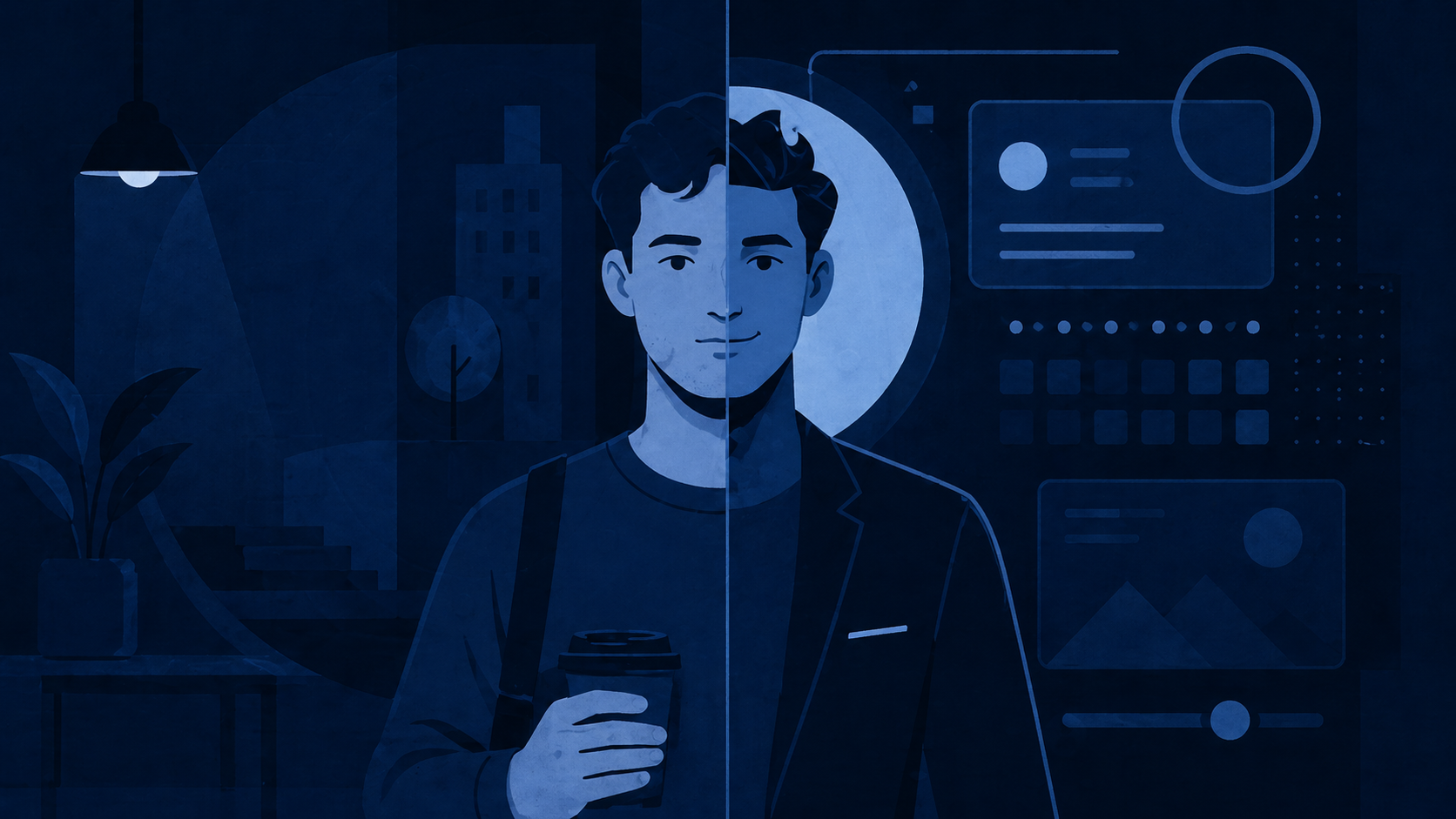
Students understand anonymity better than adults sometimes assume.
They know what it feels like to have different versions of themselves online: a real-name account, a username, a private account, a gaming handle, a group chat identity, maybe even a burner account. Sometimes that distance feels useful. It can make it easier to ask an embarrassing question, explore an interest, share an unpopular opinion, or be part of a community without everyone at school knowing.
But they also know the other side. Anonymous accounts can say things people would never say face to face. They can spread rumors, leave abusive comments, pile on strangers, or make a space feel unsafe because nobody seems accountable.
That is why online anonymity is not a simple "good" or "bad" topic. The same distance that protects one person can be used to harm another, and students need practice thinking through where that line should be.
Both. Anonymity protects whistleblowers, abuse survivors, people exploring their identity and anyone criticizing those with power. It also makes it easier to harass, troll and spread false information without consequences. The useful question for students is not whether anonymity is good, but when it protects people and when it shields harm.
Anonymity changes the social rules of a space. A student may feel safer asking a sensitive health question under a fake name, exploring an identity they are not ready to share publicly, or criticizing a powerful person without fear of immediate consequences. Anonymous speech has also played a serious role in public life, from whistleblowing to political dissent.
But anonymity can also lower the sense of accountability. Research on online aggression has linked anonymous or less identifiable spaces with lower inhibition, fewer social cues, and behavior people might not show face to face. A 2023 systematic review on anonymity and digital aggression found that anonymity is not the only factor, but it can interact with platform design, group norms, and lack of visible consequences in ways that make harmful behavior easier. (ScienceDirect)
That is why students need more than a rule like "use your real name" or "stay anonymous." Context and responsibility are what actually matter. Who is being protected? Who could be harmed? What changes when a person cannot easily be identified? Anonymity can give someone the courage to speak honestly, but it can also give someone cover to act without care.
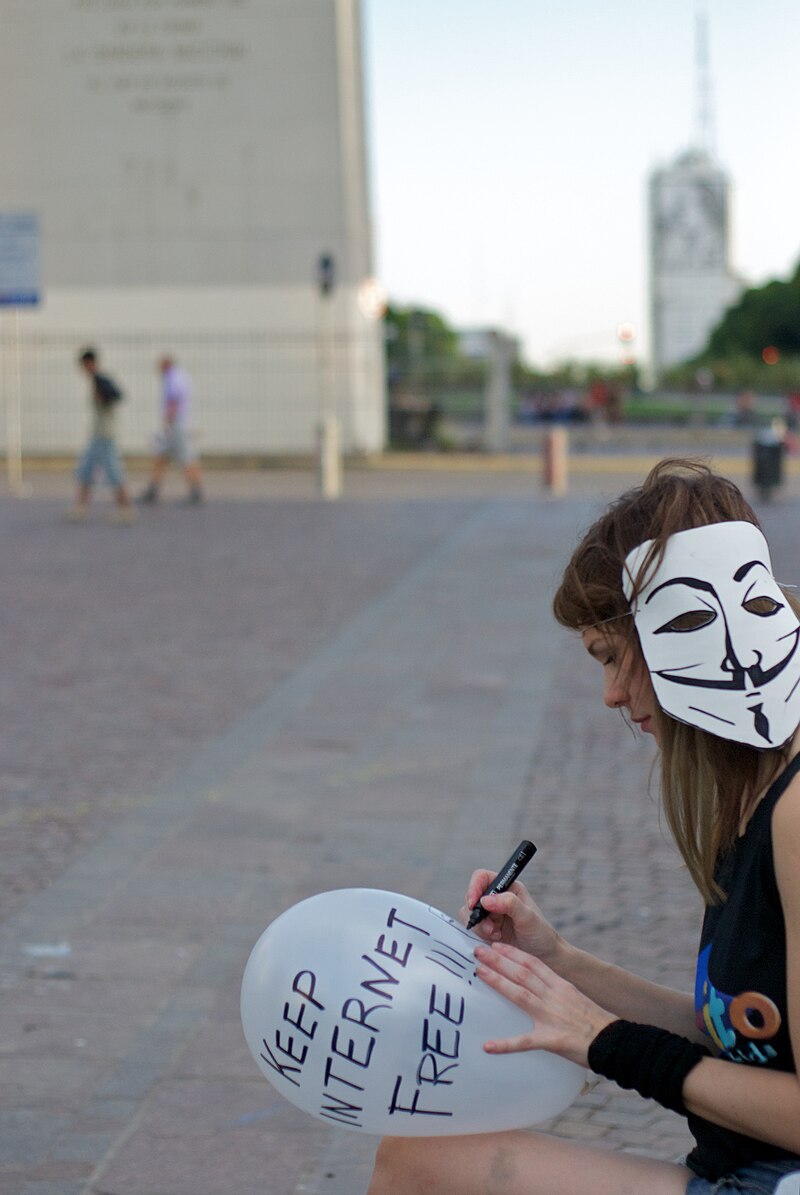
The Guy Fawkes mask became a symbol of online anonymity and political protest. Using a mask to speak without identification is not new, but the internet scaled it in ways that earlier generations never had to navigate. Photo: Beatrice Murch, CC BY 2.0.
The activity Online Anonymity helps students explore that tension without pretending there is one simple answer. It is a group activity for ages 14 to 18 that fits well in digital citizenship, online safety, media literacy, advisory, civics, ethics, or social studies lessons. Students examine when anonymity protects people, when it enables harm, and how behavior can change when a real name is not attached. They build principles they can apply across different online spaces instead of reducing anonymity to good or bad.
| Ages | 14–18 |
| Group size | Groups of 3–4 |
| Time | 60–70 minutes |
| Works for | Digital citizenship, online safety, media literacy, advisory, civics, ethics, social studies |
The activity is built in three parts. In Part 1, students consider the case for and against anonymity. They think about why someone might post under a pseudonym or without using their real name, then discuss whether anonymity itself is the problem or whether the issue is how people choose to use it.
In Part 2, students work through a spectrum of situations. These include asking a personal health question under a fake name, leaving abusive comments from an anonymous account, whistleblowing about corporate wrongdoing, exploring identity in an unsafe environment, spreading conspiracy theories without accountability, and using anonymous sources to report corruption. For each one, students identify the benefit, the risk, and whether anonymity is justified.
In Part 3, students look at how anonymity changes behavior. They compare what people may be more or less likely to do anonymously versus under their real name, such as sharing an unpopular opinion, asking for embarrassing advice, criticizing a powerful institution, reporting harmful behavior, or saying something they would never say face to face.
The teacher guide includes timing, facilitation notes, differentiation ideas, an extension task, and an assessment rubric focused on understanding anonymity, spectrum analysis, behavior analysis, group discussion, and quality of reflection.
This lesson works best when students know they are not being pushed toward one approved position. Some will see anonymity mostly as protection. Others will see it mostly as a shield for cruelty. Both reactions make sense, depending on what students have seen online.
A tricky moment can come when students treat the issue as a simple trade: remove anonymity and the harm goes away. That misses what would also be lost. Anonymous or pseudonymous spaces can help people ask for support, test ideas, report wrongdoing, or speak when being identified would put them at risk. A useful question is: "Who would be safer if anonymity disappeared, and who would be less safe?"
The behavior table can produce honest discussion if students feel trusted. Some may admit they post differently from a username than they would under their real name. Do not jump on that as a confession. Use it as a way into accountability. What changes when nobody knows it is you? What changes when the same screen name follows you over time?
Something sharpens when students try to create a principle that works across cases. "Anonymity is fine unless you hurt someone" sounds simple until they consider whistleblowing, public criticism, satire, or sensitive personal questions. Push them to be specific. "What responsibility comes with being harder to identify?" is a good closing question.
Online Anonymity is part of the Digital Privacy bundle, a collection of activities that help students think more clearly about online safety, digital identity, privacy, cyberbullying, passwords, scams, and the choices they make in digital spaces. Use it as a standalone lesson on anonymity, pseudonymity, online behavior, free speech, accountability, or internet safety, or as part of a wider sequence on online privacy and digital citizenship.