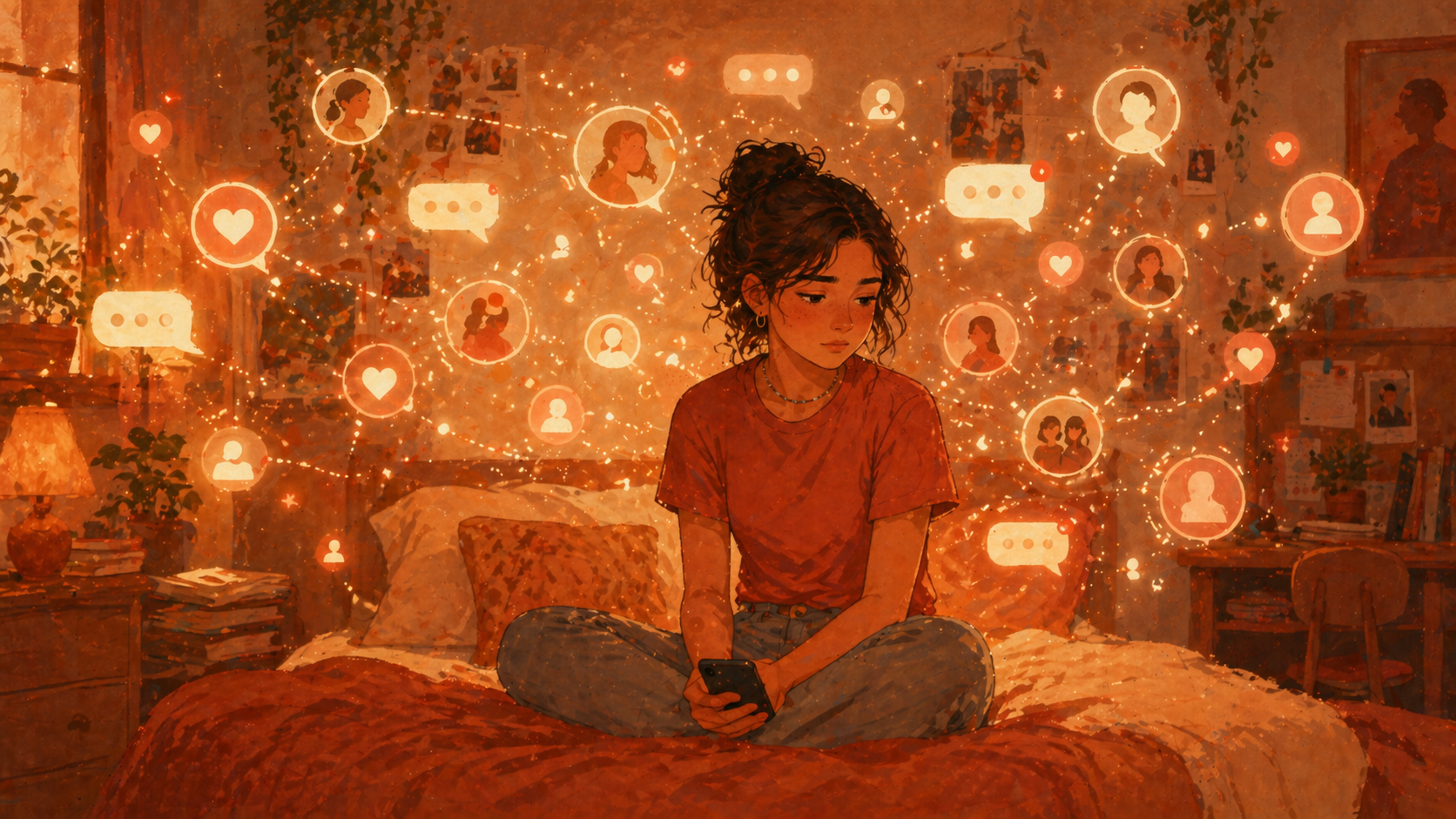
A student can have hundreds of online connections or even followers and still feel like nobody really knows them.
That is one of the strange things about growing up online. There are more ways to connect than ever: group chats, gaming servers, fandom spaces, comment sections, DMs, livestreams, Discord groups, and creators who talk directly into the camera like they are speaking to one person. For some students, those spaces are genuinely important. They can offer friendship, humor, shared interests, and a place to feel understood.
But the number of connections is not the same as the quality of connection. A student might be active in five group chats and still feel lonely at school. They might feel closer to a YouTuber they watch every day than to people they sit next to in class. They might have online friendships that feel more real than offline ones, especially if offline life feels awkward, unsafe, or hard to explain.
That is the tension students need to understand: you can be constantly connected and still feel lonely, but online connection is not automatically fake or unhealthy. What matters is whether those connections help students feel known, supported, and connected in both directions.
Yes. Online friendships can offer real support and belonging, especially for young people who feel isolated where they live. The risk is not online connection itself, but when it replaces deeper connection, or when someone feels close to a creator or online figure who does not know them, a one-sided bond often called a parasocial relationship.
Loneliness is easy to miss in school because it does not always look like being alone. A student might be funny in a group chat, active on social media, and still feel that nobody would notice if they disappeared for a while. That does not mean their online life is meaningless. It means we need a better way to talk about the difference between contact and connection.
Online relationships can be real and valuable. For students who feel different from the people around them, online communities can be a lifeline. That might include LGBTQ+ students, students with disabilities, students with niche interests, or students who simply do not feel understood in their immediate environment. Online versus offline is the wrong frame. What matters is whether the relationship is reciprocal: do both people show up, listen, respond, and matter to each other?
Parasocial relationships add another layer. These are one-sided bonds where a student feels close to a creator, streamer, influencer, or online personality who does not actually know them. That is not automatically a problem. People have felt attached to performers, authors, musicians, and presenters long before social media. What has changed is the intimacy and frequency. A creator can share daily updates, personal struggles, livestreams, and direct-to-camera messages that make the relationship feel personal. The concern is not that students have these connections. The concern is when they start replacing relationships where someone can care back.
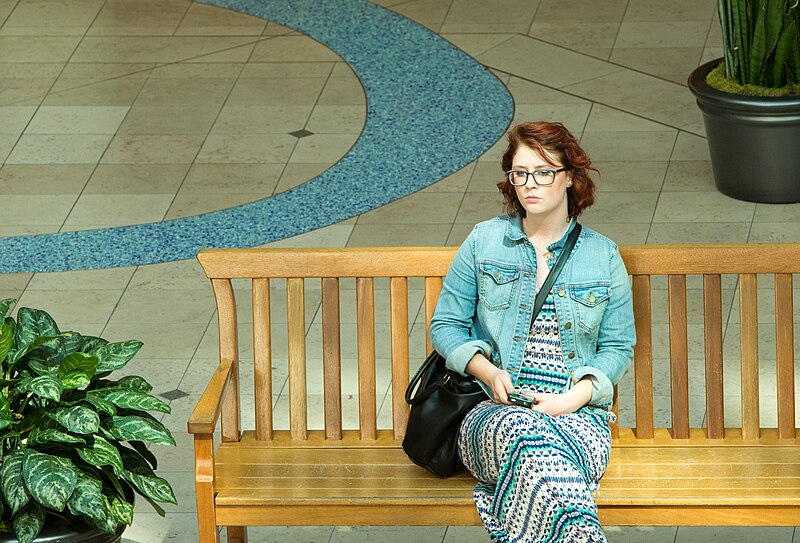
"The trouble is not really in being alone, it's being lonely. One can be lonely in the midst of a crowd." The same is true online. Presence in a group chat is not the same as being known by someone in it. Photo: Sheila Sund, CC BY 2.0.
That question is the starting point for Online Relationships and Loneliness, a group activity for ages 14 to 18 that fits well in wellbeing, advisory, digital citizenship, media literacy, life skills, or health lessons. Students compare online and offline connection, then explore parasocial relationships with creators, streamers, influencers, and online personalities. The activity does not treat online friendship as fake or loneliness as a personal failure. It helps students ask a more useful question: what kinds of connection help us feel genuinely known, and what kinds leave us feeling lonelier afterward?
| Ages | 14–18 |
| Group size | 3–4 students |
| Time | 60–70 minutes |
| Works for | Wellbeing, advisory, digital citizenship, media literacy, life skills, health |
The activity is built in two main parts plus a reflection. In Part 1, students compare online and offline connection. They look at effort, depth, risk of rejection, what each form of connection can offer students who feel different, and what each one cannot replace. This keeps the discussion balanced: online connection can be meaningful, but it is not the same as being known by someone who shows up for you in both directions.
In Part 2, students explore parasocial relationships. They work through scenarios involving a YouTuber taking a break, a streamer responding to a comment, an influencer sharing personal details, an online community feeling more real than school, and a creator quitting after years of posting. For each one, students discuss what is healthy, what is worth examining, and what need the connection might be meeting.
The final reflection asks students to think about their own online creators, communities, loneliness, and relationships. It ends with a practical question: what is one thing they could do to invest more in a reciprocal relationship, one where both people show up for each other? The lesson also includes a teacher guide with timing, differentiation ideas, and an assessment rubric focused on parasocial relationships, online and offline connection, self-awareness, group discussion, and quality of reflection.
This lesson works best when loneliness is treated as normal rather than embarrassing. Avoid asking students directly whether they are lonely in front of others. Keep the discussion focused on patterns, scenarios, and general experiences, with the more personal reflection kept private.
Where groups may stall is on the question of whether online friendships "count." Some students may immediately say yes, others may dismiss them as not real. Push for a more precise answer. A better question is: "What makes a relationship reciprocal?" If both people listen, respond, remember things, make time, and support each other, the medium matters less than the mutual care.
The parasocial scenarios tend to bring out the most honest thinking. Ask students: "What is this relationship giving the person, and what can it not give back?" That keeps the tone respectful. A creator, streamer, or influencer can offer comfort, humor, identity, routine, and a sense of belonging. But they cannot know the student in return, notice when they are struggling, or show up in the way a reciprocal relationship can.
Online Relationships and Loneliness is part of the Wellbeing and Mental Health bundle, a collection of activities that help students talk more practically about digital wellbeing, mental health, self-awareness, identity, and the pressures built into online life. Use it as a standalone lesson on online friendships, loneliness, parasocial relationships, creators, communities, or digital wellbeing, or as part of a wider sequence on wellbeing and social media.