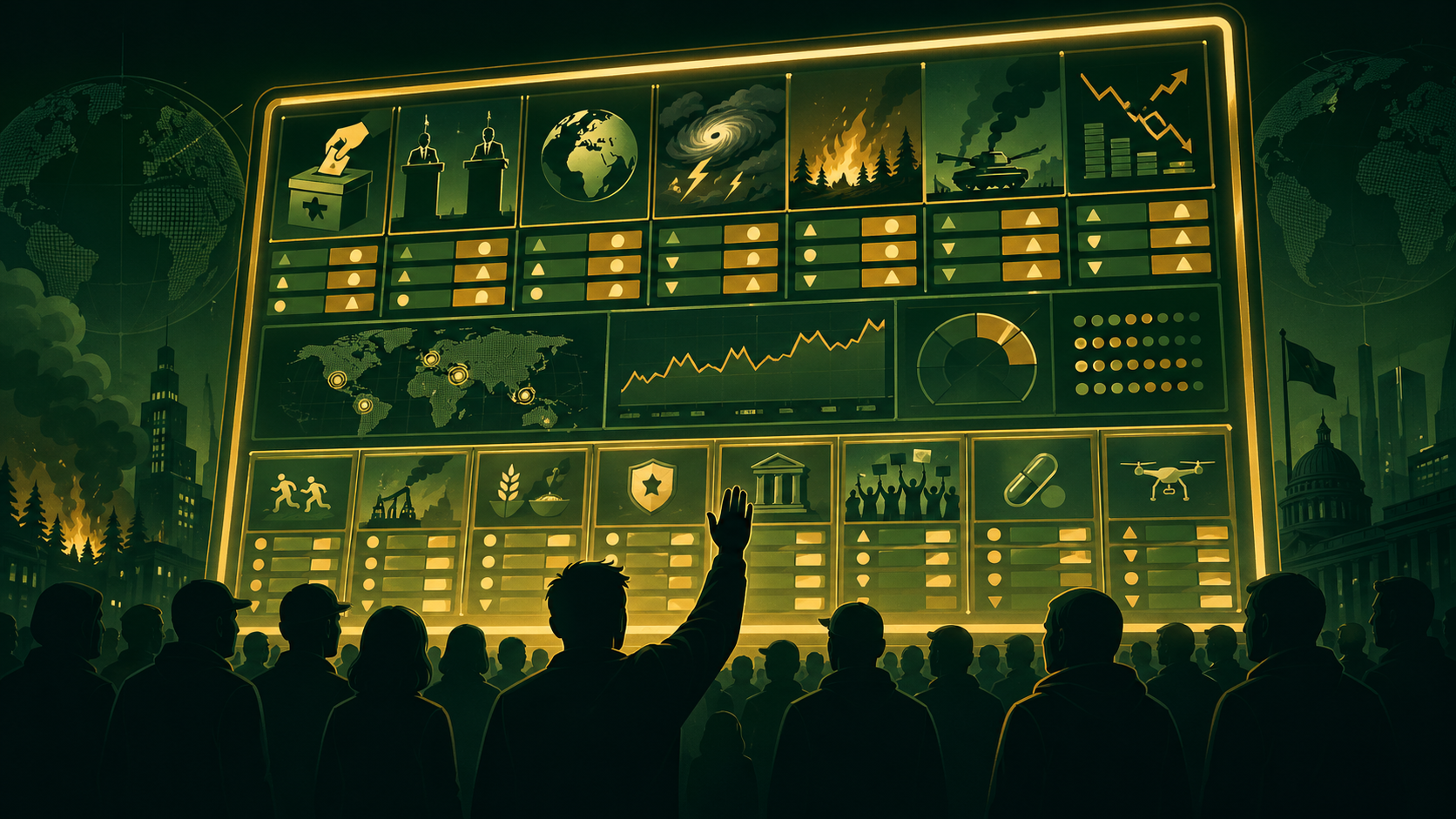
I was astounded when I read the following in the news recently. A US Army Special Forces soldier took part in the operation to capture Venezuelan president Nicolas Maduro in January 2026. In the days before the raid, he opened a Polymarket account and placed 13 bets totalling around $33,000 on whether US forces would enter Venezuela, whether Maduro would be removed, and whether Trump would invoke the War Powers Act. He walked away with more than $400,000. He was arrested shortly after.
He's not the only one. A trader bet $87,000 that the US would strike Iran, 71 minutes before the first bombs fell. Two Israelis were charged with using classified military information to bet on war outcomes. Someone correctly predicted the exact release date of Google's Gemini 3 model with a precision that suggested they either worked there or knew someone who did.
This is prediction markets. And your students have probably already seen them in their feeds.
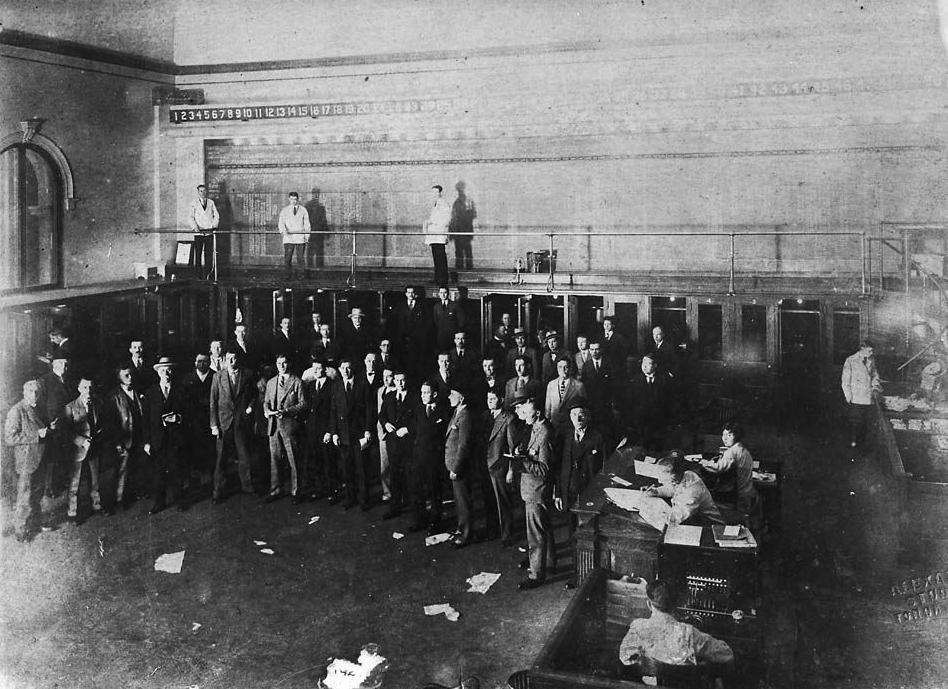
Members on the Toronto Stock Exchange trading floor, the original prediction market, where prices emerge from collective bets on the future. Photo: Alexandra Studios / City of Toronto Archives, public domain.
Prediction markets are platforms where people buy and sell bets on the outcome of future events, like elections, sports or the news. The price of a bet works like the crowd's estimate of how likely something is. Whether they are financial markets or a form of gambling is still being argued, which makes them a useful critical thinking topic.
Prediction markets, platforms where you bet real money on the outcome of future events, have moved from a niche financial curiosity to a mainstream product with billions of dollars wagered every week. Kalshi recently locked in a $22 billion valuation. Coinbase, Robinhood, and Truth Social are all trying to enter the space. Major news organizations including CNN, CNBC, Fox News, and the Wall Street Journal's parent company have signed paid partnership deals to display betting odds on screen alongside actual reporting.
Most teenagers have already encountered these platforms. What they haven't been given is a framework for what they're actually looking at, or for the question that sits underneath all of it: what happens to the way we understand news when every event becomes something you can place a bet on?
One analysis found that more than two-thirds of all money won on Polymarket was held by just 740 accounts out of over 2 million users. That pattern, a small number of sophisticated operators consistently winning while casual users lose, is the same pattern seen in every gambling market ever studied. The debate over whether prediction markets are financial instruments or gambling dressed up in financial language is exactly the kind of critical thinking gap this activity is designed to close.
I've put together a group activity that gives students practice with exactly this. It's built for life skills or wellbeing units, school counselors, and advisory periods, though it fits in any class where online media comes up. If your students are online, it belongs in media literacy, citizenship and social studies too.
| Ages | 12–18 (grades 7–12) |
| Group size | 3–5 students |
| Time | 45 minutes |
| Works for | Media literacy, citizenship, critical thinking, life skills, advisory periods |
This is a 6-page group activity for 3–5 students, built for grades 7–12 and equally usable in college and adult education settings.
The teacher guide covers timing, facilitation tips, differentiation suggestions, and a background section on how prediction markets work, including the legal arguments both companies make about why they are not gambling sites. The rubric sits on its own page for easy printing.
The student worksheet has three parts. In Part 1, students read a concise overview of how prediction markets work and fill in a comparison table explaining what distinguishes them from a regular sports bet, in their own words. In Part 2, students work through the Maduro case study, filling in an analysis table that asks what the soldier did wrong, whether his actions constitute gambling or investing, who else was harmed beyond the soldier himself, and whether geopolitical event contracts should be allowed at all. In Part 3, the teacher assigns groups to debate opposing positions: prediction markets as legitimate financial tools versus prediction markets as gambling in financial language. Groups argue their assigned side, then each student individually states where they land after hearing both. The reflection page wraps up on its own, with five questions including whether students would personally use these platforms and what law they think should exist that doesn't yet.
The case study is what makes this activity specific rather than theoretical. Students aren't discussing a hypothetical. They're analyzing something that was on the news last week.
The teacher notes suggest opening by asking students if they've heard of Polymarket, Kalshi, or sports betting apps. This is worth doing. It surfaces prior knowledge fast and immediately signals that the activity is about something real, not a textbook scenario.
The most productive entry point for the debate section is the framing question the companies themselves use: this isn't gambling, it's a financial instrument. Students tend to accept or reject that quickly. The job is to slow them down. Assign sides randomly if students cluster, and give the group arguing Position A (legitimate financial tool) time to build the strongest case they can before the debrief. Having to argue a position you disagree with is where most of the learning happens.
It's also worth flagging to students before the activity that CNN and Fox News have signed paid deals with Kalshi to show its odds on screen. That context changes how students read the question in the reflection about whether they'd trust that coverage.
Prediction Markets is available to download from Graphene - Digital Life Lessons on Teachers Pay Teachers. It's part of the Digital Money & the New Economy bundle, which covers the financial and economic forces shaping teenagers' lives online. Each activity works as a standalone session or as part of a sequence.