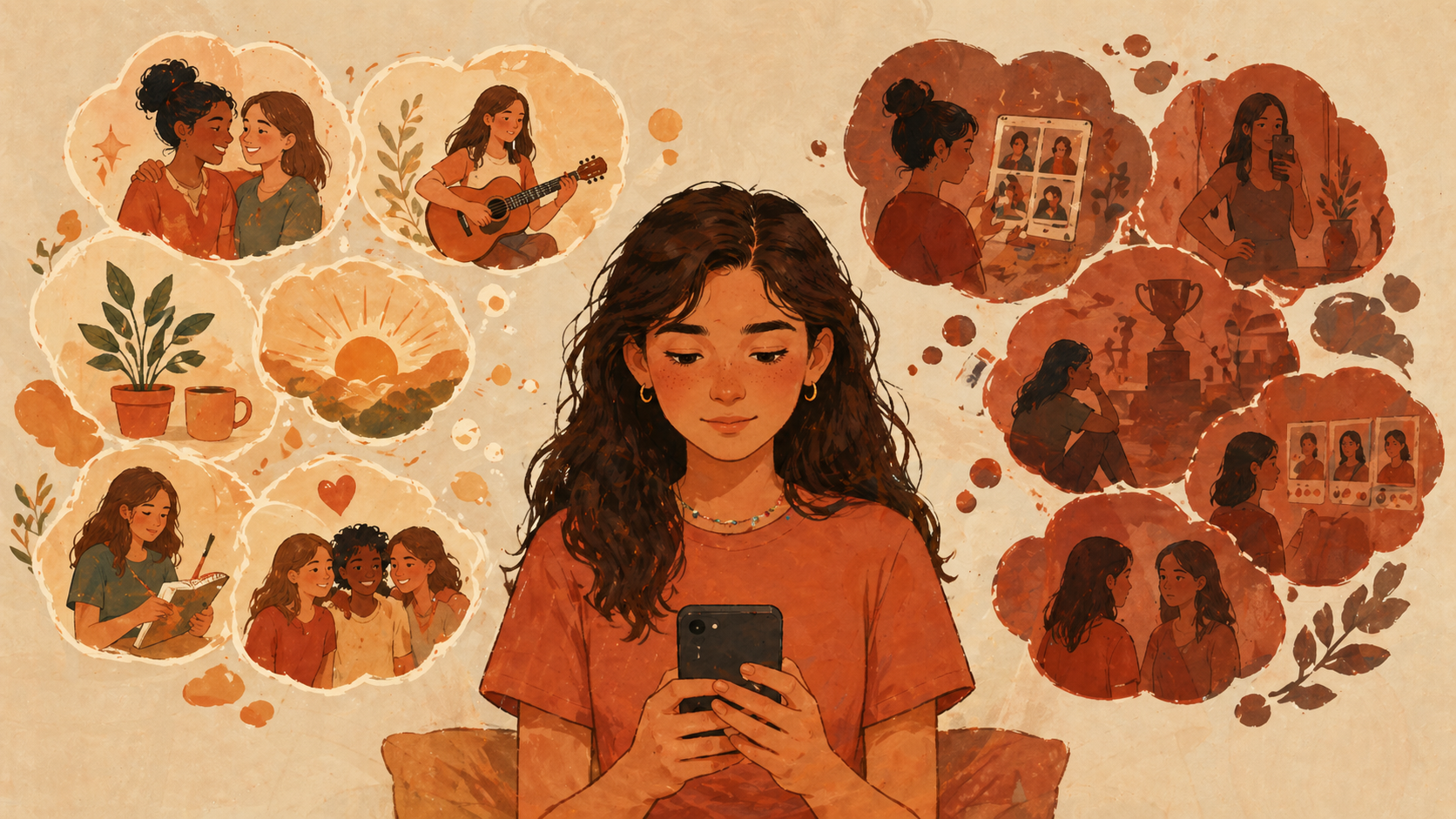
When I talk to other parents and teachers, the conversation often ends up in the same place: phones, social media, and what they are doing to young people.
The quick consensus is usually that this stuff is probably doing more harm than good. We grew up without it. We did not have group chats running all evening, feeds full of comparison, notifications during homework, or a phone beside the bed pulling us back in. So it is easy to look at teenagers now and think: no wonder they are struggling.
But then there is the awkward part. We have phones too. We follow people online. We scroll when we are tired. We check messages when we should be present. We tell young people to manage something that many adults are still learning to manage ourselves. That does not mean parents and teachers are the problem, but it does mean we are part of the environment students are learning from.
That is what makes this topic difficult. The headlines often suggest a simple answer: social media is damaging young people's mental health. The reality is more complicated, and probably more useful. Students do not just need adults to panic or shrug. They need help understanding what the evidence says, what it does not say, and which habits might genuinely protect their wellbeing.
The research is mixed. Studies find links between heavy, passive or late-night social media use and anxiety, low mood and poor sleep, especially for some vulnerable teens, but cause and effect are hard to prove. Social media can also support connection and belonging. How young people use it seems to matter more than whether they use it at all.
The public conversation around social media and mental health often moves faster than the evidence. It is tempting to say "this is clearly the cause," especially when teachers and parents can see students struggling with sleep, comparison, distraction, anxiety, and constant availability. But the research does not give us one simple answer. The National Academies' review found that the evidence does not support a broad claim that social media causes changes in adolescent health at the population level. It also says social media is not simply positive or negative, and that the effects depend on the person, the platform, the content, and the context. (National Academies)
That does not mean there is nothing to worry about. Some habits are easier to connect to harm than others. Scrolling late at night can interfere with sleep. Appearance-based content can increase comparison. Always-on messaging can make it harder to switch off. The American Psychological Association recommends that young people build social media literacy and that adults pay attention to features like likes, endless scrolling, recommended content, and alerts, especially for younger teens. (APA)
The strongest classroom approach is to hold both truths at once. Social media can support connection, identity, humor, creativity, and belonging, especially for students who feel isolated offline. It can also make some students feel worse, especially when they are already vulnerable or when their use is passive, late at night, comparison-heavy, or hard to stop. That is a more complicated message than "phones are ruining everything," but it gives students something more useful: a way to look honestly at their own habits.
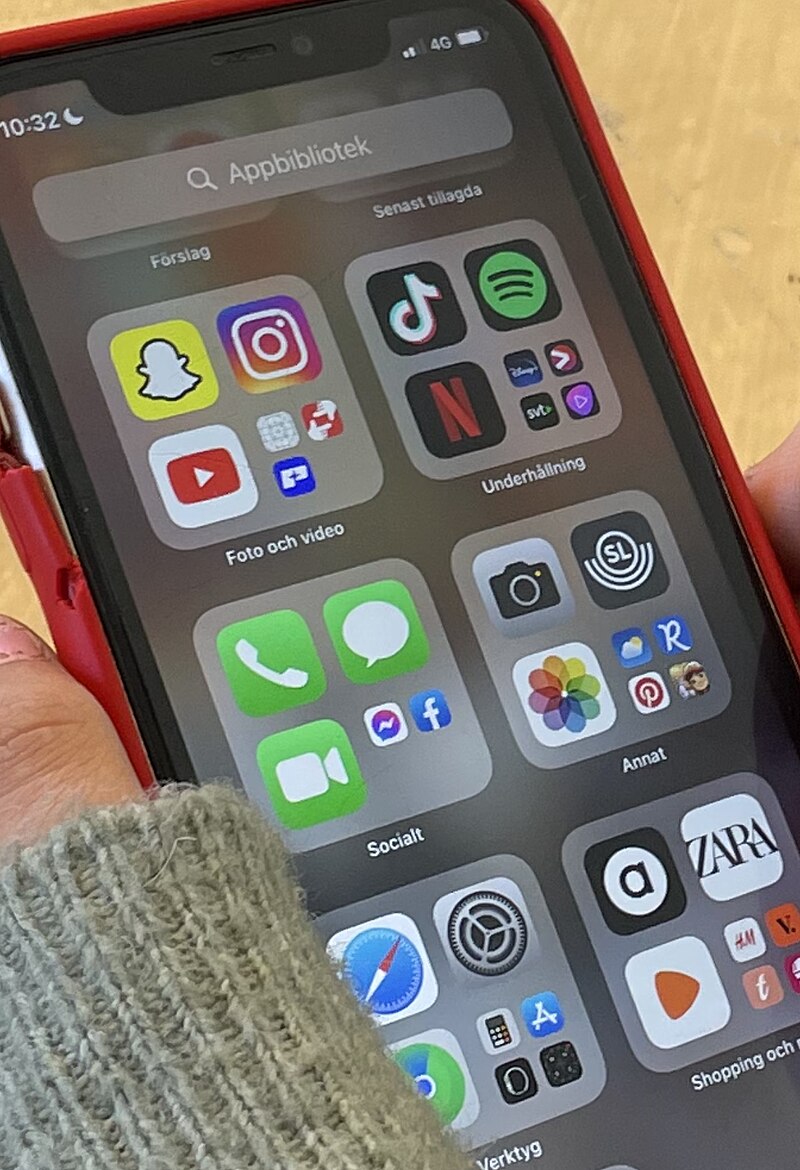
The apps students carry in their pockets are designed to compete for attention. Understanding how, and how that affects mood and wellbeing, is what this lesson is about. Photo: Theresepersonne, CC BY-SA 4.0.
That more honest position is the focus of Social Media and Mental Health, a group activity for ages 14 to 18 that fits well in wellbeing, health, advisory, digital citizenship, media literacy, or life skills lessons. Students look at what the evidence says, where the evidence is still contested, and why their own habits matter. The activity does not ask them to decide whether social media is simply good or bad. It asks them to think more carefully about when it helps, when it harms, and what they might change if a habit is affecting their mood, sleep, or sense of self.
| Ages | 14–18 |
| Group size | 3–4 students |
| Time | 60–70 minutes |
| Works for | Wellbeing, health, advisory, digital citizenship, media literacy, life skills |
The activity is built in three parts. In Part 1, students begin by writing down what they already believe about social media and mental health. They then work through an evidence table covering claims such as "social media causes depression," "Instagram is particularly harmful for teenage girls," "screen time limits improve mental health," "social media can also have positive effects," and "smartphones should be banned in schools." Each claim is paired with a verdict that keeps the nuance visible.
In Part 2, students complete a private habit check. They look at patterns like checking their phone soon after waking up, scrolling before sleep, checking likes, comparing themselves to people they follow, using social media when bored or anxious, checking their phone during face-to-face conversations, and feeling worse after scrolling. This section is individual, so students can be honest without having to disclose more than they want to.
In Part 3, students debate the bigger question. One side argues that social media is a significant cause of the youth mental health crisis and needs tighter regulation. The other side argues that the crisis has many causes and blaming social media is too simple. This gives students a way to test both arguments without being pushed toward a neat answer.
The lesson also includes a teacher guide with timing, facilitation notes, differentiation ideas, and an assessment rubric. The rubric focuses on understanding the research, self-awareness about habits, critical thinking about the debate, group discussion, and quality of reflection, so students are assessed on how well they handle complexity rather than whether they pick the "right" side.
This lesson works best if you resist the easy verdict. Some students will arrive convinced social media is harmful. Others will defend it because it is where their friendships, humor, identity, and support live. Both reactions make sense. Frame the lesson as a way to test assumptions, not win an argument.
Where groups may stall is on the research. Correlation and causation can sound abstract, so keep it concrete. If students who use social media more also report worse mental health, that does not automatically tell us which caused which. Social media might make some students feel worse. Students who already feel worse might use social media more. Or both could be true in different cases. That distinction helps students avoid oversimplifying without dismissing real concerns.
The private habit check is usually where it gets personal. Ask students, without sharing specifics: "Which kind of habit is easier to notice: time, mood, sleep, comparison, or control?" That question moves the lesson from a broad debate into something practical. Students may not be able to solve the whole research question, but they can start noticing which habits leave them feeling better or worse.
Social Media and Mental Health is part of the Wellbeing and Mental Health bundle, a collection of activities that help students talk more practically about digital wellbeing, mental health, self-awareness, identity, and the pressures built into online life. Use it as a standalone lesson on social media habits, mental health, screen time, sleep, comparison, or regulation, or as part of a wider sequence on wellbeing and digital life.