I love technology. I work in digital learning, I use technology constantly, and I have seen how useful it can be when it genuinely helps people learn, create, connect, or solve problems.
But watching platforms compete for my kids' attention has changed how I see "free" apps. When my 10-year-old daughter wants to try a simple game from the App Store, it is often loaded with ads, pop-ups, rewards, timers, and prompts to watch one more video. Sometimes the game is almost unplayable because the business model keeps getting in the way of the thing she actually came there to do.
With my 16-year-old son, it looks different. He might open an app to check one gaming clip, one message, or one update. But the feed is ready. One short video becomes another. A creator reaction leads to a highlight, then a ranking, then a joke, then a livestream moment. None of those small choices feels dramatic on its own, but the design is doing a lot of work in the background.
That is the shift I want students to notice: in the attention economy, they are often not the customer. Their attention is the product being sold. And once you see that, the design of "free" apps starts to look a lot less neutral.
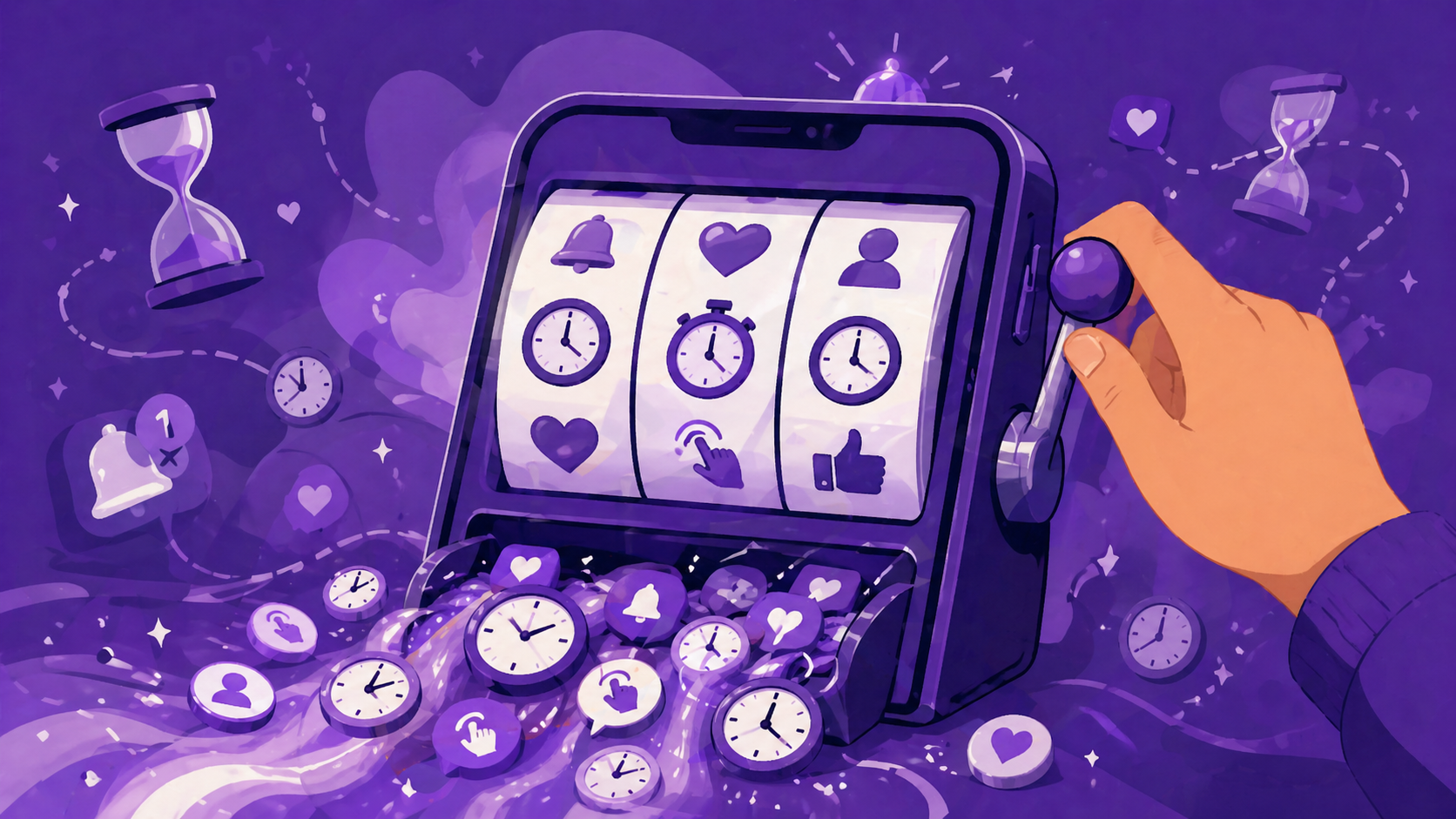
The attention economy is the idea that people's attention is a limited resource that apps and platforms compete for, because attention can be sold to advertisers. Features like infinite scroll, autoplay, notifications and streaks are designed to keep users engaged for longer. Knowing the business model helps students see their own habits more clearly.
The attention economy is not a conspiracy theory. It is a business model. Many of the apps students use feel free because they are not paying with money at the point of use. But someone is paying. Advertisers pay for access to attention, and platforms are rewarded when users stay longer, return more often, and reveal more about what keeps them engaged.
That matters because design choices are not neutral. Infinite scroll removes the natural stopping point. Autoplay starts the next video before you have decided to watch it. Notification badges create a small sense of urgency. Streaks make stopping feel like losing something. Variable rewards keep people checking because the next post might be interesting, funny, flattering, shocking, or completely pointless. Pew Research Center found that nearly half of U.S. teens say they are online almost constantly, so these design choices are meeting students at a very large scale. (Pew Research)
Telling students to delete everything misses the point, and ignores the real value of digital spaces. Enjoyment and manipulation can exist at the same time. A student can genuinely enjoy a platform and still be nudged to stay longer than they meant to. Once they understand the business model, they can start asking better questions: Did I choose to keep using this, or did the design carry me along?

Phones in hand, eyes on screen, even while moving through the world. The attention economy is designed to make this feel normal. Every glance down is a moment of engagement that platforms are built to extend. Photo: Rawpixel, CC0.
Helping students see that clearly is the aim of The Attention Economy, a group activity for ages 12 to 18 that fits well in digital citizenship, media literacy, social media literacy, wellbeing, advisory, or life skills lessons. Students look at how free apps make money, why attention is valuable, and how platform design can shape their choices without them fully noticing. The activity is not anti-technology. It is about helping students understand the business model behind the apps they use every day, so they can use them with more awareness and control.
| Ages | 12–18 |
| Group size | 3–4 students |
| Time | 55–65 minutes |
| Works for | Digital citizenship, media literacy, social media literacy, wellbeing, advisory, life skills |
The activity is built in three parts. In Part 1, students start with the basic business model: how do free apps like Instagram, TikTok, YouTube, or Snapchat make money? They discuss what it means if their attention is the product being sold, and whether that changes how they see their own relationship with these platforms.
In Part 2, students analyze specific design tactics, including infinite scroll, variable rewards, notification badges, autoplay, like counts, streaks, and disappearing stories. For each one, they discuss how it works, where they see it, and whether they have noticed it affecting their own behavior. They also consider whether a feature could be redesigned to be useful without being manipulative.
In Part 3, students complete a private habit audit using their own screen time or digital wellbeing data. They check their daily average, their most-used app, and whether the numbers surprise them. They also reflect on habits like picking up their phone without a reason, checking it first thing in the morning, opening an app and forgetting why, or feeling restless when they cannot access it.
The lesson also includes a teacher guide with timing, facilitation notes, differentiation ideas, and an assessment rubric. The rubric focuses on understanding the attention economy, self-awareness about habits, analysis of design tactics, group discussion, and quality of reflection, so students are assessed on how well they connect platform design to their own behavior.
The habit audit is the moment to slow down. Some students will guess their screen time and then be surprised by the actual number. Give them a minute with that. Keep it private and practical: students can compare what they think they do with what their phone says they do.
A tricky moment can come when students talk about manipulation. Some will say they like these apps and do not feel controlled by them. That is worth taking seriously. Enjoyment and manipulation are not opposites. A platform can be fun, useful, social, and well-designed while still using features that make stopping harder. A useful question is: "Would this feature still exist if it did not keep people on the app longer?"
Redesigning one feature is usually where it gets interesting. Ask students to pick infinite scroll, streaks, autoplay, or notification badges and make it less manipulative without removing its useful purpose. That shifts the conversation from blame to design. It also helps students see that platforms are built through choices, and different choices could create a healthier relationship with attention.
The Attention Economy is part of the Social Media and Digital Life bundle, a collection of activities that help students think more clearly about online behavior, digital wellbeing, media literacy, and the pressures built into social platforms. Use it as a standalone lesson on screen time, app design, digital habits, attention, or social media business models, or as part of a wider sequence on digital citizenship and wellbeing.