
Digital Wellbeing in the Classroom
Seven ready-to-teach lessons on social media, mental health, and AI
Discussion-led lessons that help students think clearly about their online lives, without lecturing them and without asking them to share anything private.
By Ben Klinkhamer · 80 pages · 8.5 x 11 in · ISBN 979-8174931497
Why this book helps
Digital wellbeing is not a topic students need to be lectured through. They need room to discuss it, question it, and connect it to real situations. Each lesson gives you a clear plan for doing that, so you can walk in prepared and keep the conversation on evidence and choices rather than confessions.
It does not tell students that every screen habit is a problem, and it does not hand out a universal rule for healthy screen time. It treats students as people who can weigh evidence and reach their own conclusions.
Ready to teach
Activity plans, timing options, discussion prompts, and facilitator notes for each lesson. One preparation read and you are set.
Privacy built in
Students work with general or fictional examples. Nobody is asked to disclose a diagnosis, an account, or a personal experience.
Assessment included
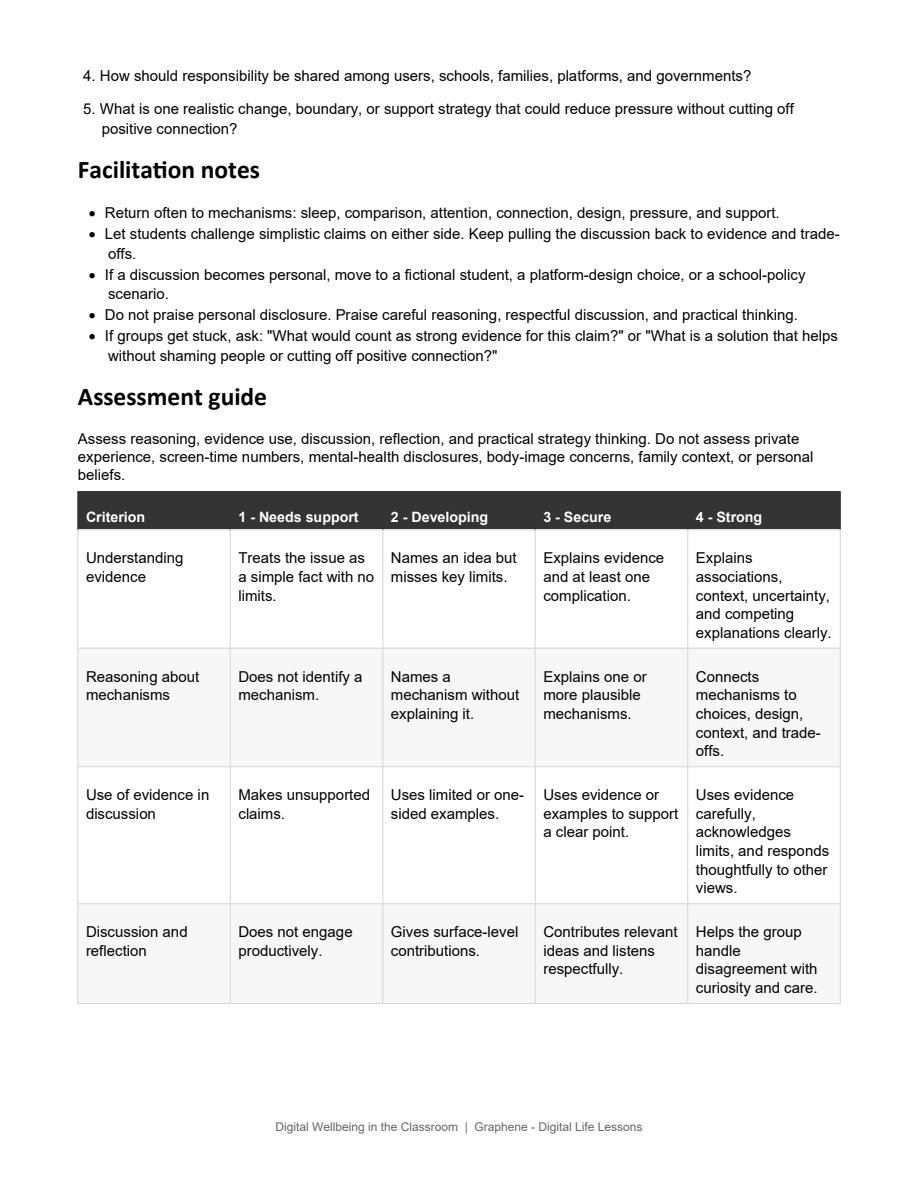
Every chapter has a rubric that scores reasoning and discussion, not personal experience or screen-time numbers.
Flexible use
Teach all seven lessons as a unit or pick one. Suited to advisory, health, counseling, SEL, media literacy, and digital citizenship.
Why a paperback
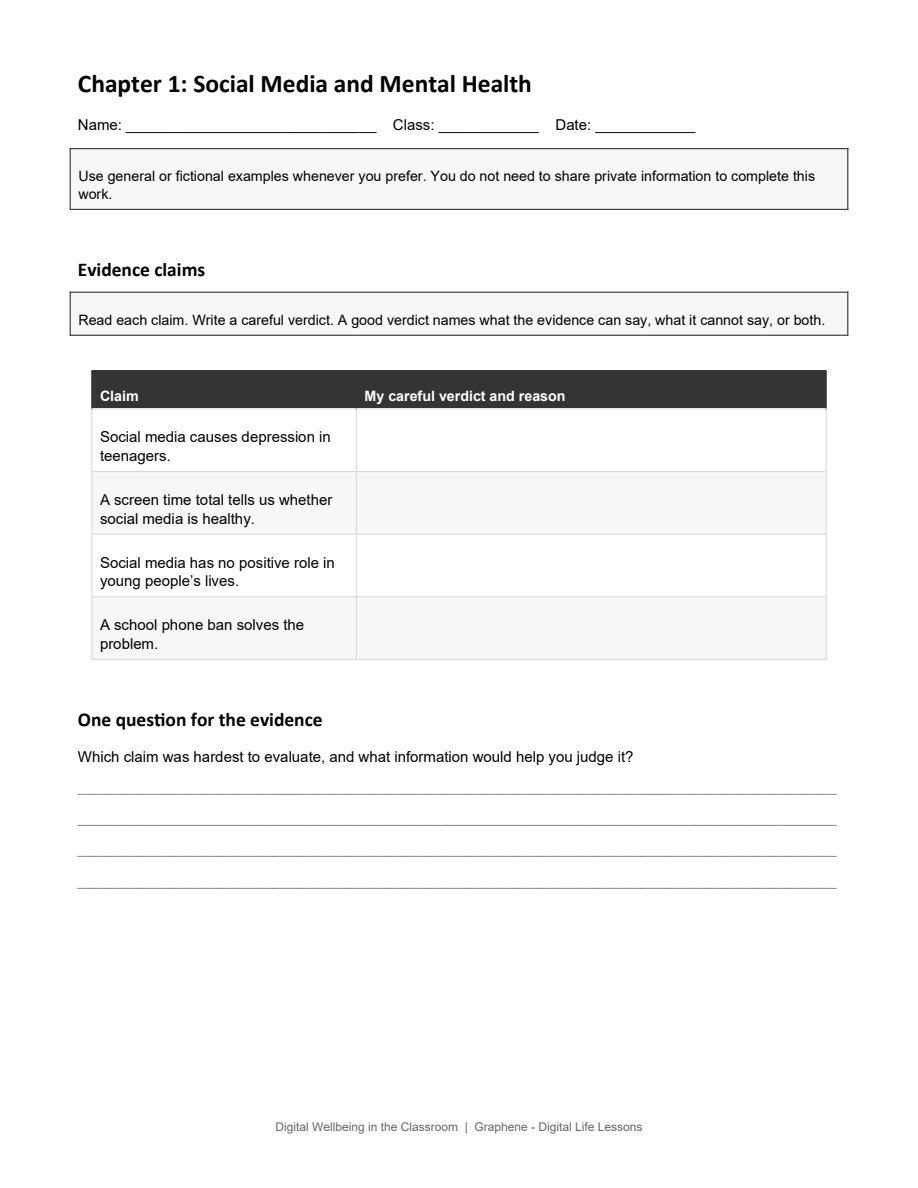
Copy the student pages. Each chapter has a reproducible student page. Buy the book once and photocopy or print the pages for your own students, as many times as you teach the lesson.
No devices, no logins. The lessons run on paper and conversation, so they work in classrooms where phones stay away and school laptops are locked down, or where the wifi has a bad day.
Easy to use in the room. Keep it open on your desk, flag the pages you use, and write your own notes in the margins. A planning page in the book lets you record what worked and what to adjust next time.
Copying is for your own students only. Please do not share or post the pages for colleagues. Other teachers can get their own copy of the book.
The seven lessons
- 1
Social Media and Mental Health
What does the research say, and where does it fall short? Students test simple claims against the evidence.
- 2
Emotions and Regulation
How feelings show up online, and what helps students pause before they respond.
- 3
Gaming and Screen Time
Why games are hard to put down, and how to talk about it without judging players.
- 4
Online Relationships and Loneliness
What makes an online connection supportive, and what can leave someone feeling more alone.
- 5
Body Image and Social Media
How comparison, filters, and feeds shape the way students see themselves and others.
- 6
Gender and Social Media
How digital spaces shape ideas about gender, and how students can question them.
- 7
AI Companions and the Feeling of Connection
The difference between feeling supported and being supported.
Look inside
Two pages from Chapter 1: the assessment rubric that comes with every lesson, and the student page you copy for your class.
Book details
- Author
- Ben Klinkhamer
- Format
- Paperback, 80 pages, 8.5 x 11 inches
- Audience
- Teachers of grades 8-12
- Published
- September 16, 2026
- ISBN-13
- 979-8174931497
Prefer digital?
The Wellbeing and Mental Health bundle on Teachers Pay Teachers covers the same topics as digital activities, if you would rather project them and share files with students online.
Bring it into your classroom
Seven lessons, student pages you can copy, and a plan for each conversation.