I once had a product sit for weeks with a steady trickle of views and not one sale. My first instinct was to assume the price was wrong, so I dropped it. Nothing changed. The actual problem turned out to be the title. It described what the resource covered, not the words a teacher would type into search. Once I fixed the title, the same product barely got found at all for a while, and then it did, and then it sold.
Two different situations both look like "views, no sales" from the outside. They need different fixes, and it's worth figuring out which one you're actually in before you change anything.
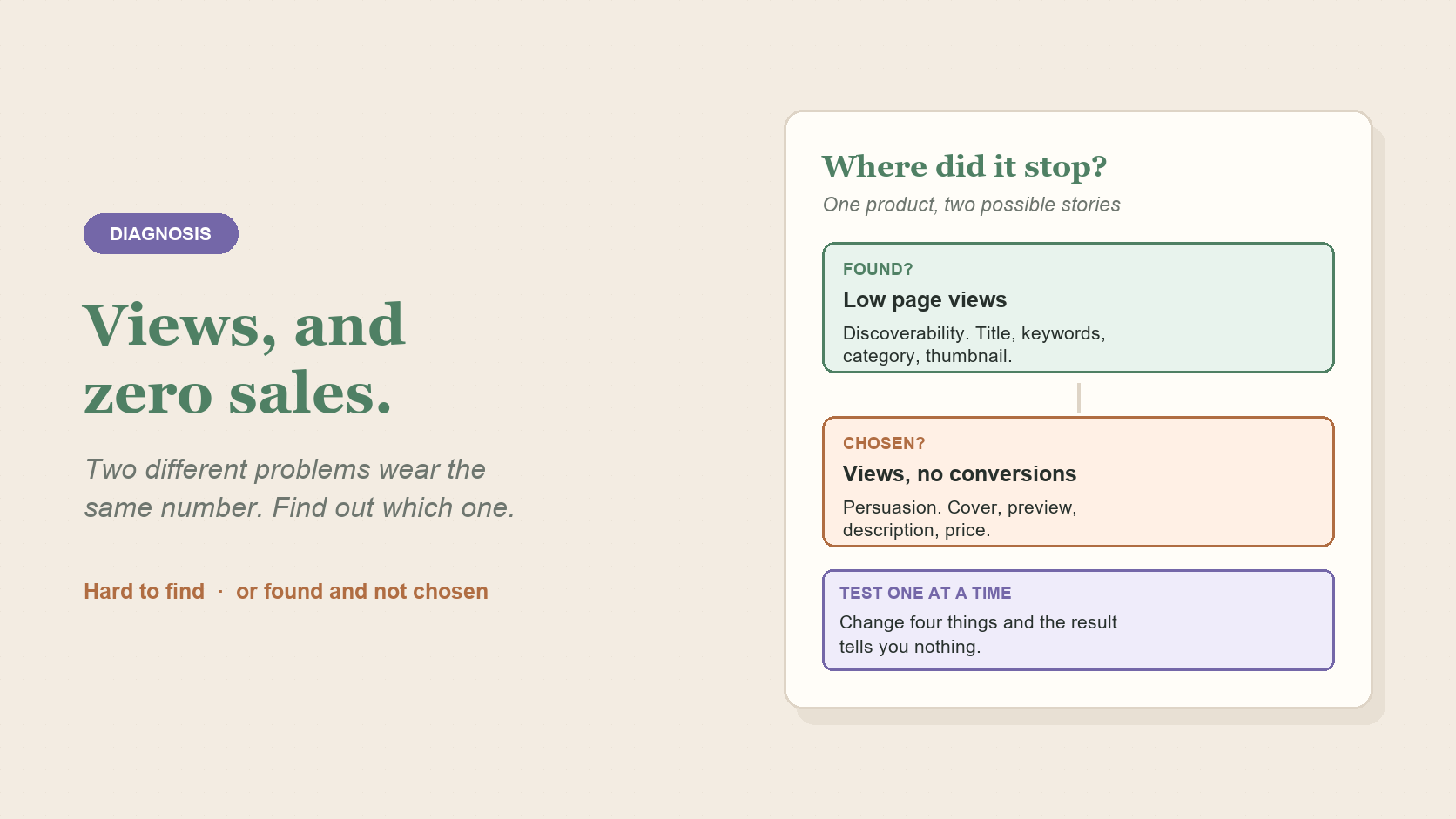
In short: first separate a visibility problem from a listing problem. Few views call for clearer buyer search language; steady views with few sales call for a closer look at the cover, preview, description, price, and product promise.
If a product has been live for a while and Page Views, the count in My Product Stats, is genuinely low, the listing itself usually isn't the first thing to fix, because almost nobody is seeing it yet. Look at whether the title uses the language a buyer would actually search, not just the language that describes your resource accurately. "Elapsed Time Word Problems" and "Time Word Problems 3rd Grade Task Cards" can point at the same product and perform very differently, because one matches how people search and one matches how you'd describe it to a colleague.
If the product is actually being found, a reasonable number of views, consistently, and still isn't converting, the discoverability problem is probably solved. Now it's worth checking the things a buyer sees once they've clicked: does the cover image represent the resource clearly, does the preview show enough real content to build trust, does the description answer what a buyer needs to know in the first couple of lines, and does the price look reasonable next to similar listings in your niche.
Worth remembering
Wishlists and carts are interest signals, not proof of a specific problem. A cart add that never becomes a sale doesn't prove checkout abandonment. It may suggest the buyer was comparing options, ran out of budget, or simply changed their mind. A wishlist add doesn't prove a price problem either. Use these as things worth checking, not conclusions already reached.

Being seen isn't the same as being chosen. Photo: Plot Spoiler, CC BY-SA 3.0.
It's satisfying to polish a cover image or rewrite a description, because it feels like real work on the product. But if the honest read is "almost nobody is finding this," that polish won't show up in your numbers, because the audience to notice it isn't there yet. Discoverability first, listing quality second, once the listing is actually being found. Otherwise you're improving something in a room nobody's walked into.
Want a clearer read without doing this by hand? Signal Loom turns the TPT exports you already have into plain-English store signals. Try a free store snapshot.